

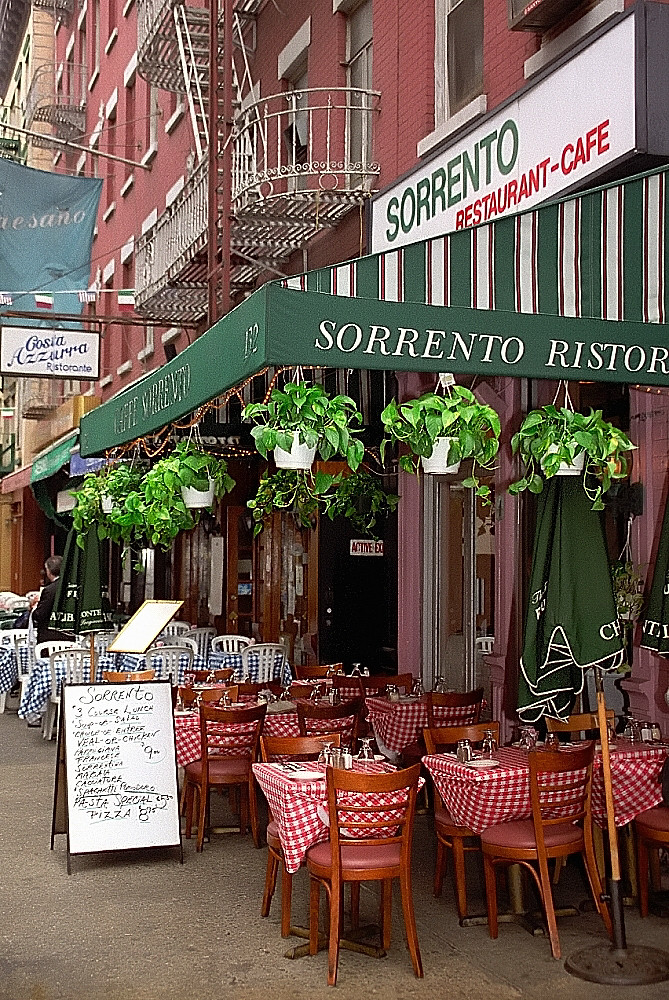
Thousands of NYC restaurants built outdoor dining setups during the pandemic under emergency rules that no longer exist, and many are still operating under requirements they’ve never actually read. The city’s permanent outdoor dining program, “Dining Out NYC,” replaced the emergency program with real permit fees, design standards, and seasonal restrictions most operators didn’t have to deal with before. Here’s what actually changed.
The emergency program is over, and the permanent one has real costs
NYC’s original pandemic-era outdoor dining program let restaurants set up sidewalk and roadway seating essentially for free and with minimal design review, but that program ended, replaced by “Dining Out NYC” — a permanent licensing program administered by the Department of Transportation with actual application fees, insurance requirements, and design standards. A restaurant still operating under old pandemic-era setup assumptions, without having applied to the current program, is very likely out of compliance without realizing it.
Sidewalk and roadway seating are two different license types
The current program distinguishes between sidewalk cafe seating and roadway seating (seating built into what was previously a parking lane), and each has its own separate design requirements, fee structure, and approval process. A restaurant that only wants sidewalk seating doesn’t need to navigate the roadway-specific rules at all, but many operators apply for the wrong license type or assume one approval covers both, which delays the process considerably.
Roadway seating now requires seasonal removal in many cases
Unlike the pandemic-era program, which allowed permanent roadway structures to remain up year-round, the current program requires many roadway seating setups to be removed or significantly modified during the winter months, since permanent roadway structures raise separate concerns around snow removal, drainage, and street maintenance access. Restaurants that built substantial permanent-feeling roadway structures under the old rules have had to budget for real seasonal teardown and storage costs they didn’t originally anticipate.
Community board input carries real weight in the approval process
Applications for outdoor dining setups, particularly roadway seating, go through a public notice and community board review period where neighbors and the local board can raise objections related to noise, traffic, or sanitation concerns. A restaurant that skips engaging with its community board before applying, assuming the process is a rubber stamp, sometimes finds its application delayed or modified based on objections it could have addressed proactively.
Design standards are specific, not left to the restaurant’s discretion
The program specifies concrete requirements around barrier types, lighting, accessibility clearances, and materials for outdoor seating structures — a restaurant can’t simply build whatever setup looks good and expect it to pass inspection. Barriers protecting roadway seating from traffic, in particular, must meet specific safety standards following incidents that prompted stricter structural requirements industry-wide, not just in New York.
Liquor service outdoors requires a separate approval on top of the seating permit
A restaurant’s outdoor dining permit does not automatically extend its liquor license to cover that outdoor space — alcohol service in sidewalk or roadway seating areas requires a separate modification filed with the New York State Liquor Authority. Restaurants that assume their existing indoor liquor license covers the new outdoor footprint risk a real licensing violation, since the state, not the city, governs that specific approval.
Penalties for non-compliant setups are real and enforced
The city has issued violations and, in some cases, ordered removal of outdoor dining structures that don’t meet current program standards or were never properly licensed under it — this isn’t a program the city treats as optional once the emergency rules lapsed. A restaurant weighing whether to formally apply versus continuing to operate an informal setup is weighing a real enforcement risk, not a theoretical one.
The application timeline is longer than most operators expect
Between the initial application, community board review period, design plan approval, and final inspection, the Dining Out NYC process can take several months from start to finish — not the few-week turnaround some restaurants remember from the emergency pandemic program’s early, hastily-built approval process. A restaurant planning to have outdoor seating ready for a specific season needs to start the application well ahead of that target date, not the month before.
Sanitation and cleanliness standards are enforced separately from the design review
Beyond the initial design and structural approval, outdoor dining areas remain subject to ongoing sanitation inspections covering trash storage, grease disposal, and general upkeep — a setup that passed its original design review can still generate violations later if it isn’t maintained to the same standard afterward. Restaurants sometimes treat the approval as a one-time hurdle rather than an ongoing compliance obligation, which is a real gap in how the program’s enforcement actually works.
Fee waivers and support exist for smaller operators
The city has offered fee reductions and application assistance for smaller, independently owned restaurants navigating the Dining Out NYC application process, recognizing that permit and design compliance costs land disproportionately harder on small operators than on larger restaurant groups. Checking current eligibility for these reductions before assuming the full fee schedule applies is worth the extra research step for a smaller, independent restaurant.
Existing sidewalk cafe license holders faced a separate transition process
Restaurants that held a traditional sidewalk cafe license before the pandemic, under the city’s older and separate sidewalk cafe program, went through a distinct transition process to move into the current Dining Out NYC framework rather than simply continuing under their old license terms unchanged. Some long-established restaurants have found that requirements which applied to their original sidewalk cafe permit years ago don’t map cleanly onto the current program’s standards, requiring an update rather than an assumption of automatic continuity.
If you’re setting up a new food business rather than adjusting an existing one, see our guide on what NYC small businesses actually need to get licensed.
Next step: if your restaurant is still running an outdoor seating setup built under the old pandemic-era rules, check your compliance status with DOT’s Dining Out NYC program directly before the next enforcement sweep, rather than assuming a setup that’s been up for years is automatically grandfathered in.
New York Daily News accepts guest contributions on NYC food and restaurant topics — see our Food & Restaurants write-for-us page if this is your beat.
Photo: “New York – Little Italy Mulberry Street ‘Sorrento Restaurant’” by David Paul Ohmer, licensed under CC BY 2.0 (https://creativecommons.org/licenses/by/2.0/).
Related articles: NYC Restaurant Letter Grades: What the A/B/C System Actually Measures · How Many NYC Restaurants Actually Have an A Grade Right Now? · JFK vs. LaGuardia vs. Newark: What Actually Determines Your NYC Airport Transfer Time