

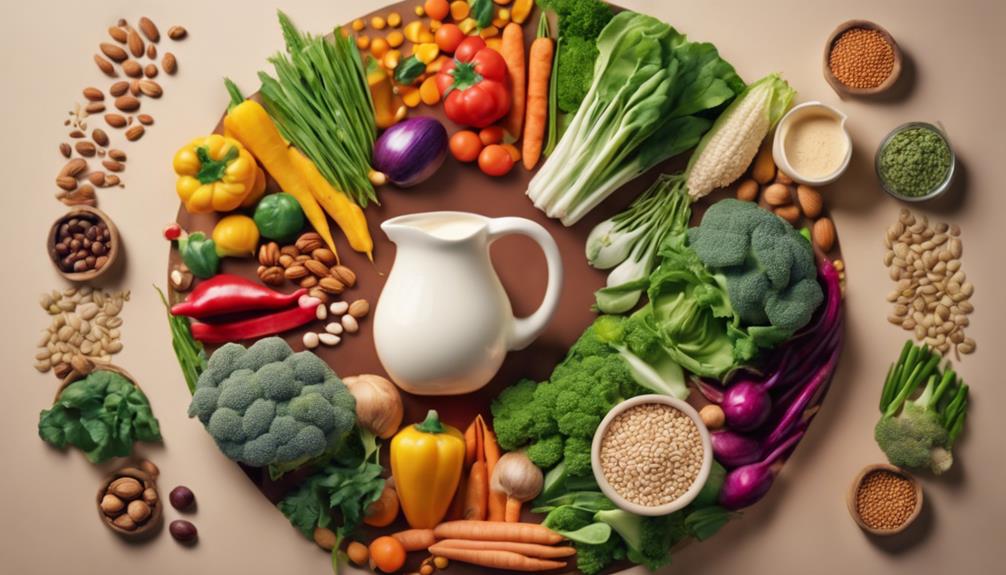
To avoid nutrient deficiencies on a vegan diet, make sure you mix various plant-based protein sources like legumes and seeds throughout your day. It's also crucial to enhance iron absorption by pairing iron-rich foods with those high in vitamin C and avoiding coffee or tea during meals. Don't forget to include a Vitamin B12 supplement, vital for nerve and red blood cell health. For omega-3 fatty acids, integrate flaxseeds and consider algae supplements for complete coverage. Lastly, monitor your calcium intake with fortified plant milks and leafy greens. There's plenty more to explore to keep your vegan diet balanced and nutritious.
Ensure Adequate Protein Sources
To ensure you're getting enough protein on a vegan diet, focus on incorporating a variety of plant-based protein sources. Legumes, nuts, seeds, and whole grains are your best bets.
For example, lentils, chickpeas, and black beans aren't just high in protein; they're also packed with fiber and other nutrients that will keep you feeling full and energized. You can add them to salads, soups, or make them into delicious veggie burgers.
Don't forget about quinoa and amaranth, which are complete proteins, meaning they contain all nine essential amino acids that your body can't produce on its own. Tofu and tempeh are also versatile protein-rich options that can take on any flavor, making them easy to incorporate into a variety of dishes.
Mixing these sources throughout your day is key to covering your protein needs. You might've oatmeal with almond butter for breakfast, a quinoa salad for lunch, and a tofu stir-fry for dinner.
This not only helps in keeping your diet balanced but also ensures that you're meeting your daily protein requirements without getting bored. Keep exploring new recipes and combinations to keep your meals exciting and nutritious.
Focus on Iron Absorption
Why should you pay attention to iron absorption in a vegan diet? Iron is crucial for producing hemoglobin, which helps carry oxygen throughout your body. However, the type of iron found in plant foods, known as non-heme iron, isn't as easily absorbed as the heme iron from animal products.
To enhance iron absorption, pair iron-rich foods like spinach, lentils, and quinoa with vitamin C-rich foods such as oranges, strawberries, and bell peppers. Vitamin C significantly boosts iron absorption, making these combinations very effective.
Also, be mindful of certain foods and substances that can inhibit iron absorption. For instance, consuming coffee or tea during meals can reduce iron uptake due to their polyphenols content. Similarly, high amounts of calcium from supplements or fortified foods might interfere with iron absorption if consumed simultaneously with iron-rich meals.
Cooking methods can also impact iron availability. For example, using a cast iron skillet to cook foods can actually increase the iron content of your meals. Additionally, soaking and sprouting beans, seeds, and grains not only improves digestibility but also enhances iron bioavailability.
Include Vitamin B12 Supplements
Nearly all vegans need to include vitamin B12 supplements in their diet to prevent deficiencies. This crucial nutrient isn't reliably available in plant-based foods unless they're fortified. Vitamin B12 is vital for nerve function, red blood cell formation, and DNA synthesis. Without enough, you're at risk for anemia and neurological issues.
You might wonder why this vitamin is such a big deal. Well, your body can't produce it on its own, and the only natural sources are animal-based products. So, if you're fully committed to a vegan lifestyle, supplements are your safest bet. They come in various forms: pills, injections, or even fortified foods like plant milks and cereals. It's essential, however, to check the labels to ensure these foods are fortified in meaningful amounts.
A daily B12 supplement typically provides more than enough to cover your needs, but it's wise to consult with a healthcare provider for personalized advice, especially if you have pre-existing health conditions or are pregnant.
Balance Omega-3 Fatty Acids
After ensuring you're getting enough vitamin B12 as a vegan, it's equally important to focus on your omega-3 fatty acid intake. Omega-3s are crucial for maintaining heart health, brain function, and reducing inflammation. As a vegan, you mightn't be consuming traditional sources like fish, but there are plenty of plant-based options to consider.
Firstly, include flaxseeds or flaxseed oil in your diet. Just a tablespoon of ground flaxseeds or a teaspoon of oil daily can significantly boost your ALA (alpha-linolenic acid) levels, a type of omega-3. You can add them to smoothies, oatmeal, or salads for an easy intake.
Secondly, chia seeds and walnuts are excellent sources too. Sprinkle chia seeds over your breakfast or snack on a handful of walnuts to get your dose. They not only provide omega-3s but also fiber and protein.
Lastly, consider algae-based supplements. These are especially important as they provide DHA and EPA, the types of omega-3s most commonly found in fish oils. Algae supplements are a direct, sustainable source of these essential nutrients, ensuring you're not missing out on their benefits.
Balancing your omega-3 intake as a vegan isn't tough with these simple adjustments.
Monitor Calcium Intake
Shifting focus to your calcium needs, it's crucial to ensure you're getting enough of this vital mineral in a vegan diet. Calcium is key for maintaining strong bones and teeth, and it plays a pivotal role in muscle function and nerve transmission. As you phase out dairy, you'll need to find robust plant-based sources.
Fortified plant milks and juices are excellent go-tos, as they're often enriched with calcium to levels comparable to cow's milk. Make sure you check the labels to confirm they're fortified.
Leafy green vegetables like kale, bok choy, and broccoli are also rich in calcium, although you'll need to consume them in larger quantities compared to dairy products.
Tofu set with calcium sulfate is another stellar option, offering a substantial amount of calcium in just a few servings. Additionally, almonds, figs, and tahini are smaller, snackable sources that can help you meet your daily requirements.
Frequently Asked Questions
How Can Vegans Increase Vitamin D Levels Naturally?
To naturally boost your vitamin D, get daily sun exposure, especially midday. You can also opt for fortified plant-based foods like certain cereals and plant milks, or consider a vegan-friendly supplement.
What Are the Best Plant-Based Sources of Zinc?
You'll find excellent plant-based zinc sources in legumes like lentils and chickpeas, seeds such as hemp and pumpkin, and nuts like cashews and almonds. Whole grains and fortified cereals also boost zinc intake.
Can a Vegan Diet Affect Thyroid Function?
Yes, a vegan diet can affect thyroid function if you're not careful. You'll need to ensure you're getting enough iodine and selenium, which are crucial for thyroid health but can be limited in plant-based diets.
Are There Any Vegan Sources of Creatine?
You won't find natural vegan sources of creatine since it's primarily in animal products. However, you can opt for synthetic supplements to ensure you're getting enough for your muscle energy needs.
How Do I Ensure Sufficient Iodine Intake on a Vegan Diet?
To ensure you're getting enough iodine on a vegan diet, include iodized salt, seaweed, and fortified foods in your meals. It's crucial to monitor your intake to avoid deficiency.
Conclusion
Now you're equipped with five critical tips to maintain a healthy vegan diet. Make sure you're getting enough protein from diverse sources. Enhance your iron absorption by pairing foods wisely, and don't forget to include vitamin B12 supplements. Balance your omega-3 fatty acids to support heart health, and keep an eye on your calcium intake to keep your bones strong. With these strategies, you'll cover all your nutritional bases, ensuring your vegan diet is as wholesome as it is ethical.
Related articles: Addressing Nutritional Gaps in Vegan Diets · Navigating Nutritional Gaps in Vegan Diets · 7 Common Vegan Diet Nutritional Deficiencies Explained