

Roughly half of NYC renters carry no renters insurance at all, and a large share of the co-op owners who do have coverage don’t actually know what their building’s master policy already covers versus what’s on them personally. The gap between those two policies is where most claim disputes actually happen. Here’s what’s actually covered, and by whom.
Renters insurance covers your belongings, not the building itself
A renter’s insurance policy covers personal property (furniture, electronics, clothing) against covered perils like fire, theft, and water damage, plus liability if someone is injured in the apartment — it does not cover the building’s structure, which remains the landlord’s responsibility and insurance. This distinction matters specifically in NYC because a landlord’s building policy covering fire damage to the structure does nothing for a tenant’s ruined furniture and electronics in the same fire — two entirely separate insurance questions resolved by two entirely separate policies.
Co-op “master policies” cover less than most shareholders assume
A co-op building’s master insurance policy typically covers the building’s structure and common areas, but individual unit interiors — flooring, fixtures, personal property, any improvements a shareholder made — generally fall outside the master policy and require the shareholder’s own separate HO-6 style policy. Shareholders who assume the building’s master policy covers everything inside their unit are carrying real, uninsured risk without realizing it, often discovered only after a water leak or fire actually happens.
Many co-op and condo buildings now require proof of individual coverage
A growing number of NYC co-op and condo boards require shareholders and unit owners to carry and prove individual HO-6 coverage as a condition of residency, specifically to reduce the building’s own liability exposure when an individual unit’s issue (a burst pipe, an electrical fire) damages neighboring units or common areas. Buyers and renters who haven’t confirmed their specific building’s insurance requirement sometimes discover it only when asked to produce proof of coverage after closing or move-in.
Flood risk varies enormously by neighborhood, and standard policies don’t cover it
Standard renters and homeowners insurance policies exclude flood damage entirely, requiring separate flood insurance — typically through the National Flood Insurance Program or a private flood carrier — and NYC’s flood risk varies dramatically by neighborhood, from minimal risk well inland to genuinely significant risk in low-lying coastal areas that saw real flood damage during past major storms. A resident assuming their standard policy covers flood damage because it covers “water damage” broadly is working from a dangerous misunderstanding; the two are not the same coverage.
Liability coverage matters more in a dense building than most renters realize
Renters and unit-owner liability coverage protects against real financial exposure if a visitor is injured in the unit, or if the resident’s own negligence (an unattended stove, an overflowing bathtub) causes damage to a neighboring unit — a genuinely more common claim scenario in a dense, multi-unit building than in a detached single-family home. Water damage originating in one unit and affecting units below it is one of the most common real insurance claims in NYC multi-unit buildings specifically, making liability coverage a practical necessity, not just a formality.
Assessments after a shared building loss can fall on individual owners
When a covered loss affects common building elements beyond what the master policy’s coverage limits pay out, co-op and condo buildings can levy a special assessment on individual owners to cover the gap — a real, sometimes substantial cost exposure that a well-informed shareholder should understand before assuming the master policy fully protects them from any building-wide loss. Some individual HO-6 policies offer “loss assessment coverage” specifically to protect against this gap, an add-on many shareholders don’t know exists until they need it.
Bundling and building-specific discounts are worth checking directly
Some insurance carriers offer discounts for bundling renters or HO-6 coverage with an auto policy, and certain buildings with strong safety records (sprinklers, doorman security, newer construction) can qualify residents for lower base premiums than an otherwise comparable unit in an older, less-monitored building. Checking with a licensed broker familiar with NYC’s specific building stock, rather than relying on a generic national insurer’s online quote tool alone, often surfaces savings a generic quote misses.
Claims involving multiple units get genuinely complicated fast
A single water-damage incident originating in one unit can trigger claims against that unit owner’s liability coverage, the affected neighboring units’ own property coverage, and potentially the building’s master policy simultaneously — a real, multi-party claims process that takes considerably longer to resolve than a simple single-policy claim. Understanding this in advance, rather than assuming insurance disputes in a co-op or condo resolve as cleanly as a single-family home claim, sets more realistic expectations for anyone dealing with a shared-building loss.
Valuable items often need separate scheduled coverage
Standard renters and HO-6 policies typically cap coverage for specific high-value item categories — jewelry, fine art, musical instruments, camera equipment — well below what a genuine loss would actually cost to replace, meaning a resident with real valuables in these categories usually needs a separate “scheduled” endorsement listing each item individually. Skipping this step because a base policy technically includes “some” coverage for these categories is a common, costly gap discovered only after a real loss and a disappointing claim payout.
For the broader co-op vs. condo ownership picture this insurance question sits inside, see our breakdown of the real approval-process differences between the two.
Next step: if you’re a renter, co-op shareholder, or condo owner without a current policy, get a real quote from a broker familiar with NYC buildings specifically — and if you already have coverage, confirm directly with your building’s managing agent what the master policy does and doesn’t cover, rather than assuming.
New York Daily News accepts guest contributions on NYC insurance topics — see our Insurance write-for-us page if this is your beat.
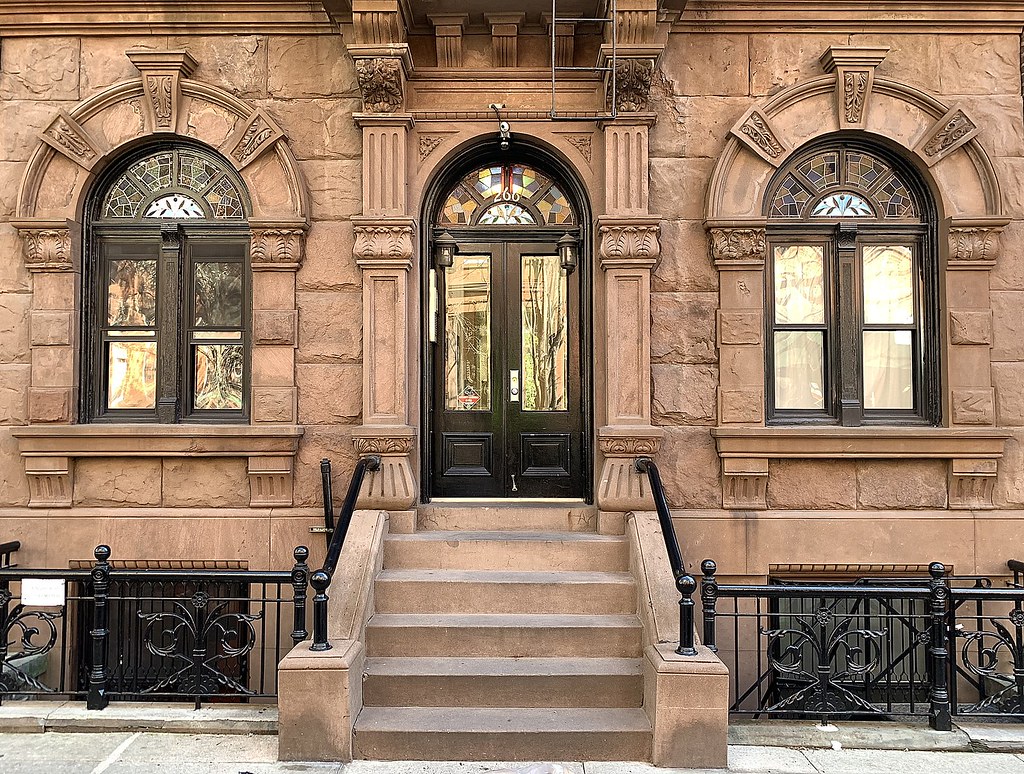
Photo: “A bold face: 266 West 11th Street (1887), Greenwich Village, New York” by Spencer Means, licensed under CC BY-SA 2.0 (https://creativecommons.org/licenses/by-sa/2.0/).
Insurance is only part of protecting your home — see our piece on what actually makes an NYC apartment truly pet-friendly.
Related articles: What NYC Small Businesses Actually Need to Get Licensed · How Local SEO Actually Works for NYC Businesses · Basement Remodeling Experts in Albany, NY: Transform Your Home with Clifton Development Group