

Driving for Uber or Lyft anywhere else in the country might take an afternoon of onboarding. In New York City, it requires a TLC license — a real regulatory process with its own vehicle rules, driver requirements, and fees that catch first-time applicants off guard. Here’s what actually stands between signing up in the app and picking up your first NYC ride.
The TLC license is separate from — and required in addition to — app approval
Getting approved to drive on the Uber or Lyft app is not the same as being licensed to drive for hire in NYC — the Taxi and Limousine Commission (TLC) issues its own driver license, independent of any specific app, and a driver needs both before actually picking up paid rides in the city. A driver approved by the app but not yet TLC-licensed is not legally allowed to work, regardless of what the app’s own onboarding status shows.
The application process includes requirements beyond a standard driver’s license
TLC driver licensing requires a defensive driving course, a drug test, a background check, and a TLC-specific written exam covering NYC-specific rules — a meaningfully longer process than simply holding a valid New York driver’s license. Applicants sometimes budget only for the app’s own requirements and are surprised by the additional time and cost of the TLC-specific steps layered on top.
The vehicle itself has to meet separate TLC standards, not just be roadworthy
A car used for TLC-licensed for-hire driving needs to meet specific age, inspection, and insurance requirements distinct from standard vehicle registration — commercial-level insurance in particular is typically required and costs meaningfully more than standard personal auto insurance. A driver planning to use their existing personal vehicle should confirm it actually qualifies and budget for the insurance difference before assuming their current setup is sufficient.
Congestion pricing and for-hire vehicle surcharges add real, separate costs
Beyond standard congestion pricing tolls affecting all vehicles entering Manhattan’s congestion zone, for-hire vehicles are subject to additional per-trip surcharges specifically tied to TLC-licensed trips — costs that factor into a driver’s actual take-home earnings in ways that vary by where and when they’re driving. Drivers estimating earnings purely off the app’s displayed fare, without accounting for these surcharges, often end up with a real gap between expected and actual income.
License renewal and continuing requirements don’t end after initial approval
TLC driver licenses require periodic renewal, and drivers must maintain ongoing compliance with things like vehicle inspections and insurance — a license isn’t a one-time credential that stays valid indefinitely once issued. Letting a renewal lapse, even briefly, can result in a driver being deactivated from apps until TLC compliance is restored, a real disruption to income for drivers who don’t track renewal dates proactively.
Multiple apps are allowed, but each still requires separate app-level onboarding
A single TLC license allows a driver to work across multiple platforms (Uber, Lyft, and others) without needing separate TLC licenses for each — but each individual app still requires its own account approval process on top of holding a valid TLC license. Drivers hoping to maximize earnings by working multiple apps should expect to complete each platform’s own onboarding steps even though the underlying TLC credential is shared.
Driver pay rules exist specifically for NYC for-hire drivers, not just app-set rates
NYC has implemented minimum pay standards specifically for app-based for-hire drivers, a real regulatory floor that exists independent of whatever rate the app itself might otherwise offer — a protection some drivers aren’t aware applies to their earnings until they specifically look into it. These minimum pay rules have been the subject of ongoing disputes between the city, drivers, and the app companies, making it worth checking current, updated figures rather than an older cited number.
Airport pickup rules add another layer of TLC-specific procedure
Picking up passengers at JFK or LaGuardia as a TLC-licensed driver involves specific staging area and queuing procedures distinct from general street pickups — a driver unfamiliar with airport-specific TLC procedures can end up wasting significant time or violating queuing rules without realizing it. This is a common area where even legally licensed, experienced city drivers still occasionally get caught off guard by an airport-specific rule change.
Vehicle age limits mean a driver’s own car sometimes ages out mid-ownership
TLC rules impose maximum vehicle age limits for for-hire use, meaning a car that qualified when a driver first got licensed can become ineligible a few years later purely due to age, regardless of its condition or mileage. A driver planning to use one vehicle for the long term should check the current age-limit rule against their car’s model year, rather than assuming a currently-compliant vehicle stays compliant indefinitely.
Leasing a TLC-ready vehicle is a common alternative to buying one outright
Given the combination of commercial insurance, age limits, and TLC-specific vehicle standards, many drivers lease a TLC-compliant vehicle through a dedicated fleet company rather than purchasing and outfitting a personal car themselves — a real tradeoff between predictable weekly lease costs and the long-term equity of owning a vehicle outright. New drivers unsure whether they’ll stick with for-hire driving long-term often start with a lease specifically to avoid the larger upfront commitment of buying a compliant vehicle before knowing if the work suits them.
Drivers with certain past driving or criminal history should specifically check TLC eligibility rules before investing time and money into the broader application process, since some disqualifying factors are stricter under TLC review than under a standard driver’s license renewal. Finding out about a disqualifying issue after completing the defensive driving course and background check paperwork is a frustrating and avoidable outcome that an early eligibility check prevents.
For the toll side of the equation, see our breakdown of what NYC congestion pricing actually charges drivers — for-hire vehicle surcharges stack on top of these same base tolls.
For real numbers on the fleet you’d be joining, see our breakdown of who actually owns NYC’s for-hire vehicle fleet.
Next step: before applying, check the TLC’s current official licensing requirements directly rather than relying on the app’s own onboarding checklist alone — the TLC’s requirements are the actual legal bar, and they occasionally change independent of what any single app displays to new applicants.
New York Daily News accepts guest contributions on NYC automotive and transportation topics — see our Automotive write-for-us page if this is your beat.
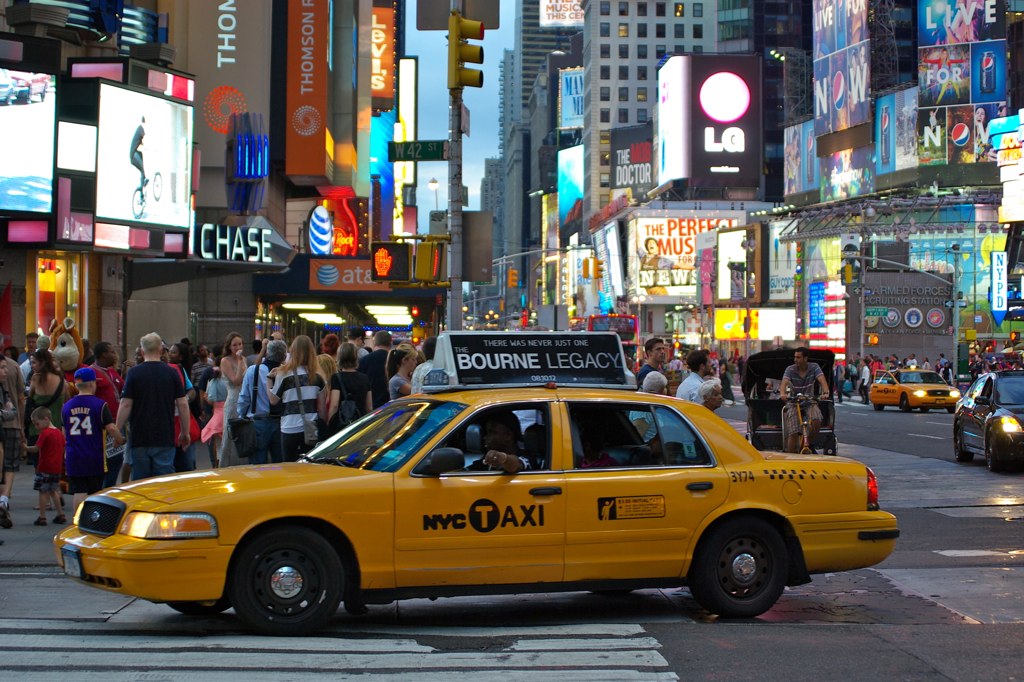
Photo: “New York City – Time Square – Yellow Cab” by Pascal Subtil, licensed under CC BY 2.0 (https://creativecommons.org/licenses/by/2.0/).