

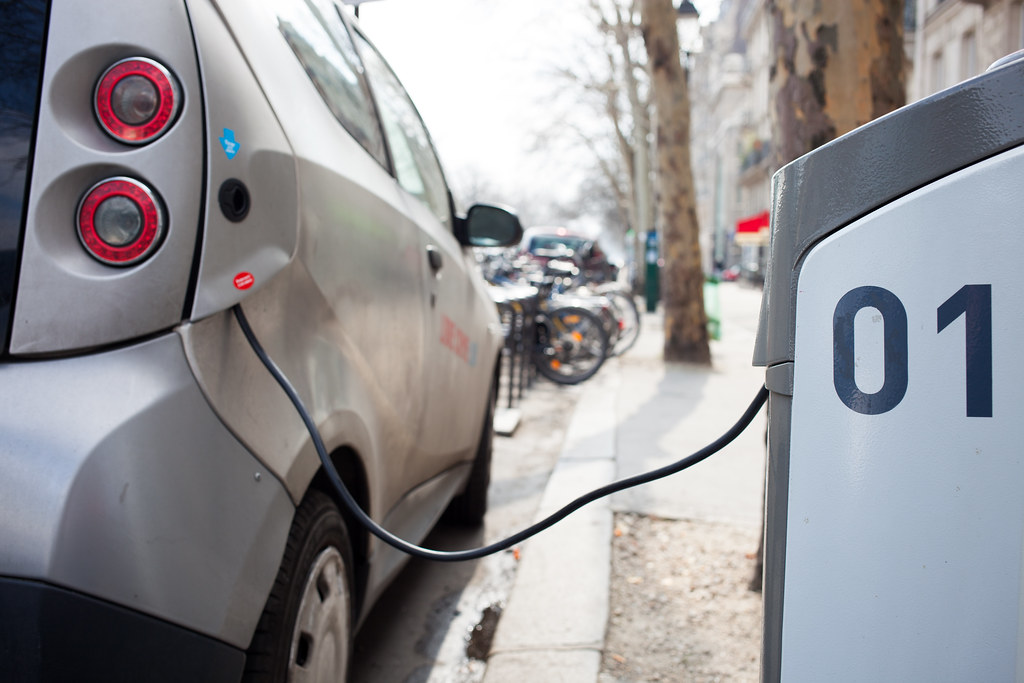
New York City has installed more than 1,000 public electric vehicle charging ports since 2022, and most drivers still can’t find a reliable map of where they actually are. The city runs at least three separate charging programs with different rules, different pricing, and different physical hardware — treating them as one system is why so many EV owners end up circling a block looking for a working plug. Here’s how it actually breaks down.
The city’s curbside chargers are a distinct program from private stations
NYC’s Department of Transportation runs a public curbside EV charging pilot that installs Level 2 chargers directly into street parking spots across the five boroughs, separate from the private fast-charging stations run by companies like EVgo, ChargePoint, and Electrify America at gas stations, garages, and retail lots. A driver assuming “the city’s chargers” refers to one unified network will have a hard time, since curbside spots, private retail chargers, and garage-based chargers all have different access rules and none of them share a single app or payment system.
Curbside charging spots come with a time limit, not unlimited parking
Public curbside charging spots are typically time-limited to a few hours, after which the vehicle is expected to move regardless of whether the battery is full — these are charging spots, not general EV parking spots, and treating them as the latter risks a ticket even while legitimately plugged in. This distinction trips up new EV owners specifically, since a gas station pump has no equivalent “you must leave once done” enforcement the way curbside charging spots do.
Level 2 and DC fast charging are not interchangeable in practice
Level 2 chargers, the type most common on NYC streets, typically take several hours for a meaningful charge, while DC fast chargers — concentrated mostly at private stations, not curbside spots — can restore significant range in under an hour. A driver who needs a fast top-up during a short errand and pulls up to a curbside Level 2 spot expecting quick-charge speeds will be waiting far longer than planned, since the charging speed is a hardware limitation of the spot itself, not something adjustable by the driver.
Multi-unit buildings face a separate installation process entirely
Residents of co-ops, condos, and rental buildings who want a home charger installed generally need board or landlord approval plus an electrical capacity assessment, since older NYC apartment buildings were not wired with EV charging load in mind. This process can take months, not days, which is why many multi-unit-building residents end up relying on public or workplace charging even after buying an EV, rather than assuming a home charger installation is a quick electrician visit.
State and utility rebates can meaningfully offset installation costs
New York State and utilities like Con Edison offer rebate programs that cover a portion of home or workplace charger installation costs, separate from any federal EV purchase incentive. These rebate programs have specific eligibility rules and application windows that change periodically, so checking current program status directly with the utility rather than relying on a rebate amount quoted a year or two ago is the only reliable way to know what’s actually available right now.
Real-time charger availability apps are more reliable than the city’s own map
Third-party apps like PlugShare and ChargePoint’s own app show real-time availability and user-reported charger status, while the city’s static list of curbside charger locations doesn’t reflect whether a given spot is currently occupied, out of service, or blocked by a non-EV. Drivers who rely solely on a government list without cross-checking a real-time app frequently arrive at a technically-listed charging spot that isn’t actually usable in that moment.
Non-EV vehicles parking in charging spots is a recurring, cited problem
Curbside EV charging spots are marked with signage and often a green curb or dedicated marking, and parking a non-EV there is a citable violation — but enforcement is inconsistent enough that EV drivers regularly report arriving at a charging spot already occupied by a gas-powered vehicle. Reporting a blocked charging spot through 311 creates a record even when enforcement doesn’t happen immediately, which matters if the same spot becomes a repeat problem worth escalating.
The charging network is still expanding, with more locations added regularly
The city has continued adding curbside charging locations on a rolling basis rather than in occasional large batches, meaning a neighborhood with no public charger last year may have one now. Checking current listings periodically — rather than assuming a past search for local chargers is still accurate — is worth doing every few months given how actively this specific infrastructure is being built out.
Fleet and for-hire vehicle electrification is moving faster than personal cars
NYC’s for-hire vehicle sector, including rideshare and taxi fleets, has been electrifying faster in percentage terms than personal vehicle ownership, partly driven by city and state incentive programs aimed specifically at high-mileage commercial drivers rather than occasional personal use. A driver comparing “how many EVs are on NYC streets” against national adoption figures without separating fleet vehicles from personal ones will get a skewed picture of how quickly individual New Yorkers are actually buying electric cars versus how quickly commercial fleets are converting.
EV adoption in NYC still trails much of the rest of the state
Despite the visibility of charging infrastructure investment, EV adoption rates in dense NYC boroughs lag behind suburban and upstate New York, largely because street parking without guaranteed access to a home charger remains the default living situation for most city residents. This gap is part of why the curbside charging program exists in the first place — it’s specifically designed to address a barrier that doesn’t apply the same way to homeowners with driveway access elsewhere in the state.
Next step: before your next public charging trip, cross-check the city’s curbside charger list against a real-time app like PlugShare for the specific spot’s current status — it’s the single step that prevents the most common wasted trip EV owners report.
New York Daily News accepts guest contributions on NYC automotive and transportation topics — see our Automotive write-for-us page if this is your beat.
Photo: “Electric car charging station” by Håkan Dahlström, licensed under CC BY 2.0 (https://creativecommons.org/licenses/by/2.0/).
Related articles: Driving for Uber or Lyft in NYC: What TLC Licensing Actually Requires · NYC Alternate Side Parking: How Suspension Decisions Actually Get Made · NYC For-Hire Vehicle Fleet: Who Actually Owns the Cars