

LinkNYC kiosks get most of the attention, but they’re only one piece of a much larger patchwork of free public Wi-Fi across the city — and knowing which system actually covers where you are matters, since the coverage, speed, and login process differ meaningfully between them. Here’s what actually connects beyond the sidewalk kiosks.
NYC Parks Wi-Fi covers select park locations with its own separate network
For the sidewalk-kiosk side of this system, see our full breakdown of what NYC’s LinkNYC kiosks actually offer.
The NYC Parks Department operates free Wi-Fi at a specific set of parks and recreation centers citywide, a network entirely separate from LinkNYC with its own connection name and coverage footprint — a visitor assuming LinkNYC’s citywide reach extends into every park may find that a specific park’s connectivity actually comes from this distinct system instead, or not at all if that particular park isn’t on the covered list. Checking NYC Parks’ own published Wi-Fi location list, rather than assuming coverage based on LinkNYC’s separate map, is the accurate way to check a specific park.
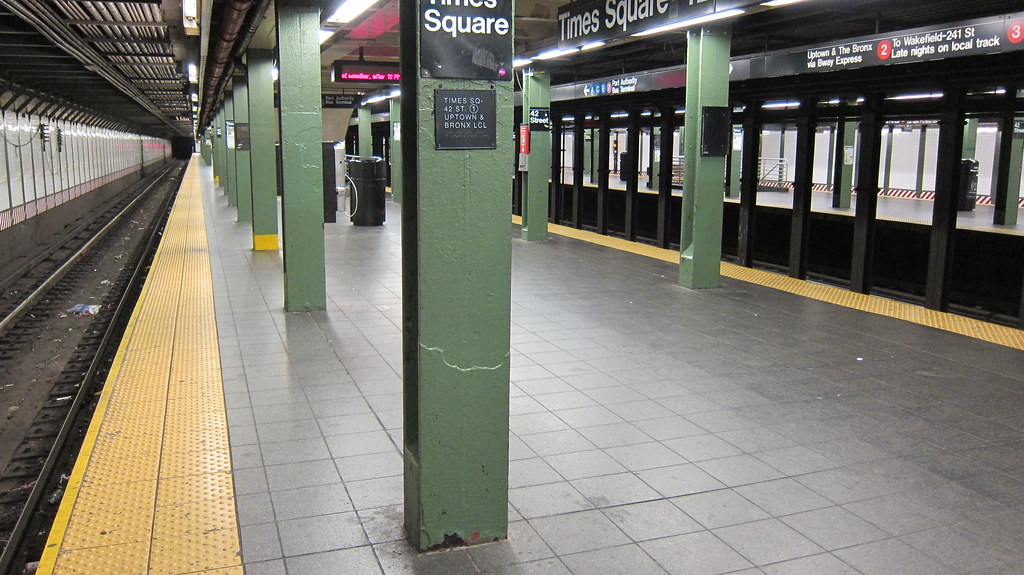
The subway system has its own underground Wi-Fi network, unrelated to street-level kiosks
Underground subway stations are covered by a separate Wi-Fi system built specifically for the transit environment, run through a different operator and infrastructure than LinkNYC’s street-level kiosks — a rider expecting their LinkNYC connection to carry seamlessly underground will lose it entering the station and need to connect to the transit-specific network separately. This system covers station platforms and mezzanines at most (not all) underground stations, but generally does not extend connectivity onto moving trains between stations.
NYCHA has its own resident-focused connectivity initiatives
Beyond general public Wi-Fi, NYC Housing Authority has run specific broadband access initiatives aimed at connecting NYCHA residents, distinct from the general public LinkNYC or Parks networks — these programs are specifically scoped to NYCHA developments and residents, not general public infrastructure open to any passerby the way LinkNYC is. A NYCHA resident’s actual home internet access, where these programs apply, is a genuinely different question from general public Wi-Fi availability in their neighborhood.
Public libraries offer both in-building Wi-Fi and free take-home hotspots
NYC’s three public library systems (New York Public Library, Brooklyn Public Library, Queens Public Library) offer free Wi-Fi inside branches, and many branches also lend free mobile hotspot devices patrons can take home for a set loan period — a genuinely different and often overlooked resource compared to fixed public Wi-Fi locations, specifically useful for anyone needing connectivity beyond just standing near a kiosk or park. This hotspot lending program has real eligibility and availability limits (not unlimited stock), worth checking with a specific branch directly.
Coverage radius and speed vary significantly across all these systems
LinkNYC kiosks offer a roughly 150-foot connection radius at genuinely fast speeds, while other public Wi-Fi systems (park-specific networks, in-building library Wi-Fi) vary in both coverage radius and actual throughput depending on the specific infrastructure and how many users are connected simultaneously. Assuming all “free NYC Wi-Fi” performs identically regardless of which system it actually is leads to real, avoidable frustration for anyone relying on a specific connection for something time-sensitive.
None of these systems share a single login or account system
LinkNYC, NYC Parks Wi-Fi, subway station Wi-Fi, and library Wi-Fi each require connecting to their own separately-named network, and none share a unified login, account, or app across systems — a user moving between a park, a subway station, and a LinkNYC kiosk in the same afternoon needs to reconnect separately to each one, since being logged into one doesn’t carry over. This fragmentation is a real, if minor, practical friction point compared to how a single citywide network might otherwise work.
Coverage gaps still exist, particularly outside Manhattan’s densest corridors
Despite the combined footprint of all these systems, real coverage gaps remain, particularly in parts of the outer boroughs with lower LinkNYC kiosk density and fewer covered parks — free public Wi-Fi access in NYC is broad but not universal, and residents in lower-coverage neighborhoods have a meaningfully different practical experience than residents in Manhattan’s most kiosk-dense corridors. This unevenness has been a specific point of advocacy for expanding public Wi-Fi infrastructure more equitably across boroughs.
Higher education institutions sometimes extend limited public access too
Some CUNY campuses and other institutional partners have, in specific locations, extended limited guest Wi-Fi access beyond their own students and staff — a real but inconsistent additional resource that isn’t part of any unified city network and varies campus to campus based on each institution’s own policy. Checking directly with a specific nearby campus, rather than assuming a blanket policy applies citywide, is the only reliable way to know whether this applies in a given neighborhood.
Business improvement districts in several commercial corridors have also independently funded their own local free Wi-Fi zones as a district-level amenity, separate from any city-run system — another layer of the patchwork worth knowing about specifically in commercial shopping and dining districts, where a BID-funded zone might provide the only reliable free option nearby.
Next step: if you’re relying on free public Wi-Fi for something specific (a job application, a video call, a large download), check which system actually covers your specific location and its known speed and coverage radius beforehand — not just whether “free Wi-Fi” is generally available nearby.
New York Daily News accepts guest contributions on NYC technology topics — see our Technology write-for-us page if this is your beat.
Photo: “016” by MTAPhotos, licensed under CC BY 2.0 (https://creativecommons.org/licenses/by/2.0/).
This isnt the only “free” service with a hidden cost — see our piece on the hidden cost of free cloud storage plans.
Related articles: 10 Best Tax Planning Strategies for Startups · Top Tax Planning Strategies for Startup Success · Top Tax Planning Strategies for Startup Success