

Alternate side parking rules cause more towed cars in New York City than any other single infraction, and most of those tickets come from the same handful of mistakes. If you park on the street in any of the five boroughs, the rules below are the ones that actually cost people money.
Check the sign, not the app
Parking apps pull from a citywide database that isn’t always current after a suspension is announced for a holiday or street cleaning change. NYC Department of Transportation signage on the block is the legal standard traffic agents actually enforce. When the two disagree, the physical sign wins, and “the app said it was fine” is not a defense that holds up at a NYC Parking Violations Bureau hearing.
Alternate side suspensions still require moving your car back eventually
A suspended alternate-side day means street cleaning won’t happen, not that the rule disappears permanently. Drivers who leave a car parked through a suspension often get caught out when the next scheduled cleaning day arrives and they’ve lost track of the calendar. Set a recurring reminder for your specific side of the street rather than relying on memory of “it was suspended last time.”
Commercial loading zones convert back to metered parking after hours
A “Commercial Vehicles Only” sign typically applies only during posted hours, often 7 a.m. to 7 p.m. on weekdays. Outside those windows, the same curb frequently reverts to standard metered or unmetered parking. Read the full sign, including the time range, rather than assuming a commercial designation applies around the clock.
Muni-meter receipts need to be visible, not just paid for
Paying at a muni-meter kiosk doesn’t complete the transaction from an enforcement standpoint – the printed receipt has to sit on the dashboard, printed side up, visible through the windshield. A paid-but-not-displayed receipt is one of the most common avoidable tickets, especially for drivers who pay and then forget the paper on the passenger seat.
Bike lane and bus lane cameras enforce automatically, without an officer present
NYC has expanded automated camera enforcement for bus lanes and, in some corridors, bike lanes, meaning a vehicle can be ticketed for a blocking violation without any traffic agent physically present to witness it — a real, growing enforcement pattern that differs from the officer-issued tickets many drivers still picture as the default. A driver who briefly stops in a camera-enforced lane assuming no one saw it should specifically not assume the absence of a visible officer means the stop went unrecorded.
Towing and impound costs add up faster than the original ticket
A towed vehicle in NYC triggers a towing fee, a daily storage fee at the pound, and the underlying ticket itself, all due before the car is released — costs that can exceed several hundred dollars within just a few days if a car sits unclaimed over a weekend. Drivers who discover a car missing should check NYC’s tow pound locator immediately rather than assuming theft, since a towed vehicle and a stolen one look identical from the curb, and storage fees accrue daily regardless of how the confusion gets sorted out.
Fire hydrant and crosswalk distance rules catch more drivers than the posted signs alone
NYC law prohibits parking within 15 feet of a fire hydrant and within 20 feet of a marked or unmarked crosswalk at an intersection, rules that apply whether or not a sign specifically calls them out at that exact spot — unlike alternate-side or metered parking, these distance requirements are citywide defaults, not location-specific postings. Drivers who look only for signage and don’t independently judge hydrant and crosswalk distance are the ones most likely to get an unexpected ticket in an area that otherwise looks like ordinary open curb space.
NYC has no residential parking permit system, unlike many comparable cities
Unlike Boston, Chicago, and several other major U.S. cities, New York City does not operate a residential parking permit program that reserves street spots for local residents — all legal street parking citywide remains open to any vehicle regardless of the driver’s address. This means a resident gets no priority access to parking directly outside their own building, and proposals to introduce a residential permit system have been debated periodically without being implemented; drivers new to the city from a permit-system city should specifically not assume any address-based priority exists here.
Fighting a ticket has a real deadline
New York City gives drivers 30 days from the ticket’s issue date to request a hearing, either online through the Parking Violations Bureau, by mail, or in person. Missing that window generally forfeits the right to contest the ticket, regardless of how strong the underlying argument is. If you plan to dispute a ticket, start the process the same week you receive it rather than setting it aside.
Next step: before your next street-parking hearing deadline sneaks up on you, photograph the posted sign at your usual spot today – it’s the single piece of evidence that ends most disputes fastest.
Illegal parking is also the single most-reported complaint to NYC’s 311 system citywide — see our full breakdown of NYC 311 complaint data for how it compares by borough.
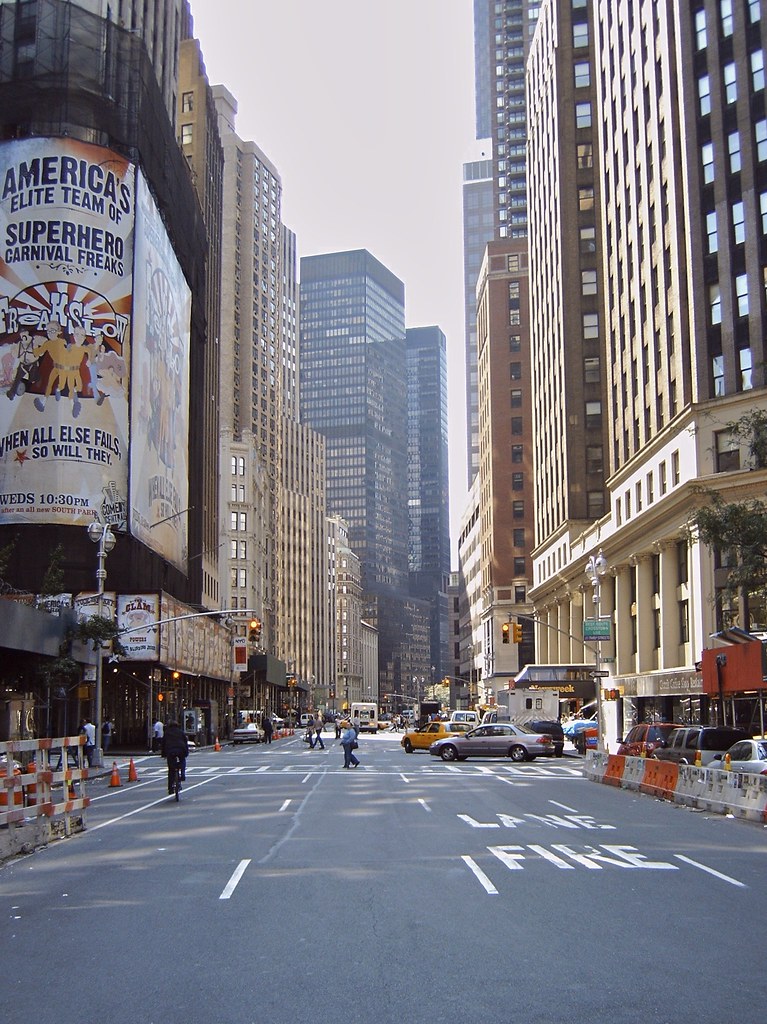
Photo: “Manhattan street” by Willem van Bergen, licensed under CC BY-SA 2.0 (https://creativecommons.org/licenses/by-sa/2.0/).
Related articles: The NYC Rent Stabilization Rules Most Tenants Get Wrong · How a NYC Rezoning Actually Gets Approved – And Where Residents Can Weigh In · NYC Congestion Pricing Rules: What Drivers Actually Pay and When