

Twice a year, New Yorkers lose or gain an hour of sleep and the city’s transit, traffic, and daily rhythms shift with it — but daylight saving time’s actual mechanics, and the ongoing push to end the twice-yearly switch entirely, are less understood than the simple “clocks change” headline suggests. Here’s what actually happens and where the debate to stop switching currently stands.
The federal government sets the rule, but states have real (if limited) authority
Daylight saving time observance is governed by federal law (the Uniform Time Act), but states have the option to opt out of the twice-yearly switch and remain on standard time year-round — Arizona (mostly) and Hawaii already do this. What states currently cannot do unilaterally is adopt permanent daylight saving time instead of permanent standard time; that specific switch requires an act of Congress, which is the actual sticking point in recent legislative pushes to end the biannual change.
New York has formally supported ending the switch, but can’t do it alone
New York State has passed legislation supporting a move to permanent daylight saving time, contingent on federal authorization or neighboring states making a coordinated regional move — a real legislative position, not just talk, but one that can’t take effect on its own under current federal law. This is why New Yorkers haven’t seen an actual end to clock-changing despite genuine state-level political support for it.
Transit schedules absorb the time change without much visible disruption
The MTA and other regional transit systems build the twice-yearly time change into their operating schedules without requiring riders to do anything specific — unlike some countries’ rail systems that hold trains at stations during the fall “extra hour,” NYC transit simply operates on the new clock time immediately. The most common real disruption isn’t a scheduling problem but a personal one: commuters whose body clocks haven’t caught up yet showing up at platforms at what feels like the wrong time for a few days.
The “spring forward” transition carries measurably real safety data behind it
Multiple public health and traffic safety studies have found a measurable increase in traffic accidents and workplace injuries in the days immediately following the spring transition, attributed to acute sleep loss rather than the daylight change itself — this is a documented pattern, not just an assumption people make about feeling tired. The “fall back” transition, which adds an hour of sleep, doesn’t show the same spike, reinforcing that the effect is specifically about sudden sleep loss.
Financial markets and computer systems handle the switch through built-in automation now
Modern financial trading systems, computer operating systems, and most networked devices update automatically at the scheduled transition time using time zone databases maintained centrally and pushed via software updates — a very different situation than decades ago, when clock changes required manual intervention across countless individual systems. Occasional real disruptions still happen when a device runs outdated software without the current year’s time zone data, but this has become a fairly rare edge case rather than a widespread problem.
Businesses with hourly workers face a real, specific payroll wrinkle
Employers with hourly staff working an overnight shift that spans the clock change face a genuine payroll calculation question — an employee working the “fall back” shift technically works an extra hour, while one working the “spring forward” shift works one fewer — and wage law requires paying for actual hours worked, not just the scheduled shift length. This is a real compliance detail some smaller employers overlook, particularly restaurants, hotels, and other businesses running overnight shifts.
Public opinion supports ending the switch, but doesn’t agree on which time to keep
National polling has consistently shown a majority of Americans want to stop changing clocks twice a year, but that same polling shows real disagreement over whether to settle on permanent standard time or permanent daylight time — each option has genuine tradeoffs (darker winter mornings under permanent daylight time versus darker winter evenings under permanent standard time) that keep the debate from resolving into a simple consensus even among people who agree the current system should end.
A federal bill to end the switch has repeatedly stalled despite bipartisan sponsorship
The Sunshine Protection Act, which would make daylight saving time permanent nationwide, has been reintroduced in Congress multiple times with bipartisan sponsorship but has not passed both chambers and been signed into law — procedural stalling rather than outright opposition has been the pattern so far. Until federal legislation actually passes, New York and every other state currently observing the switch remains legally required to keep changing clocks twice a year, regardless of state-level preference.
Older adults and shift workers face a longer real adjustment period than most people
Sleep researchers have found that circadian adjustment to the spring time change can take several days to a week for many adults, and longer for older adults and people who already work irregular or overnight schedules — the common assumption that everyone “adjusts by Tuesday” doesn’t hold evenly across different age groups and work patterns. This is part of why some sleep health advocates specifically cite vulnerable populations, not just general inconvenience, when arguing for ending the biannual switch.
Next step: however this year’s transition lands on the calendar, plan for a few days of reduced sleep quality around the spring change specifically — the traffic and workplace injury data suggests treating those first few days with a bit more caution isn’t overcautious, it’s backed by real numbers.
New York Daily News covers stories that directly affect NYC residents’ daily routines — see our New York News write-for-us page if you have a local angle on a story like this one.
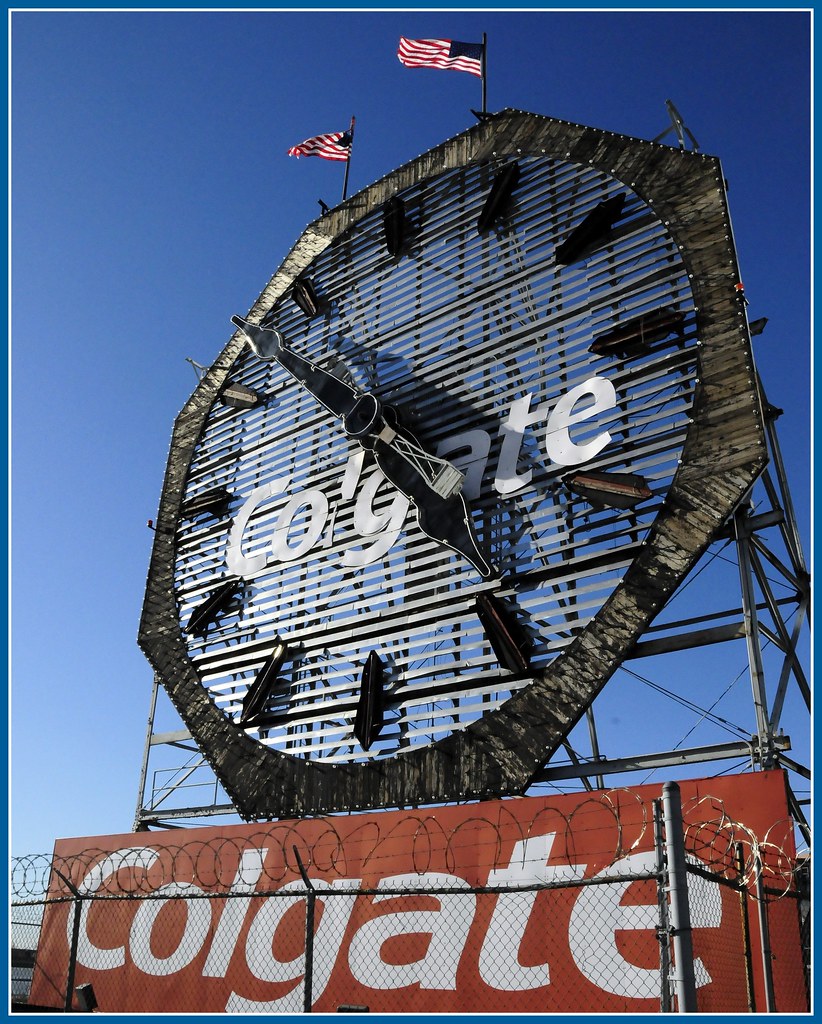
Photo: “Colgate Clock Jersey City” by Tony Fischer Photography, licensed under CC BY 2.0 (https://creativecommons.org/licenses/by/2.0/).