

JFK, LaGuardia, and Newark sit at three different distances from Manhattan, but distance alone explains almost none of the actual difference in how long it takes to get into the city. Traffic patterns, transit connections, and which borough or state you’re headed to matter more than miles on a map. Here’s what actually determines transfer time at each airport.
JFK’s AirTrain solves the “stuck on the Van Wyck” problem, but only partway
JFK’s biggest historical bottleneck was the Van Wyck Expressway, which backs up predictably during rush hour and turns a 25-minute cab ride into well over an hour. The AirTrain JFK sidesteps this by connecting terminals directly to the subway (E, J, Z at Jamaica) and the Long Island Rail Road at Jamaica Station, bypassing surface traffic entirely for that leg. The catch: the AirTrain itself charges a separate fare on top of subway fare, and it only gets you to Jamaica or Howard Beach — from there, a subway ride into Manhattan still takes 45-60 minutes depending on the line and time of day.
LaGuardia has no train connection at all, which changes the calculus entirely
Unlike JFK and Newark, LaGuardia has no direct rail link to Manhattan — the long-discussed AirTrain LaGuardia project was cancelled, leaving buses, taxis, and rideshare as the only options. The M60 SBS bus connects to several subway lines in Manhattan and Queens, and it’s genuinely fast when traffic cooperates, but LaGuardia’s proximity to Manhattan (closer in miles than JFK) doesn’t translate to faster transfers once the Grand Central Parkway backs up, which it does often. A flight into LaGuardia can end up taking longer to reach Midtown than a flight into JFK, despite the shorter distance, purely because of this missing rail option.
Newark’s NJ Transit connection is the fastest of the three, if you’re headed to the right side of town
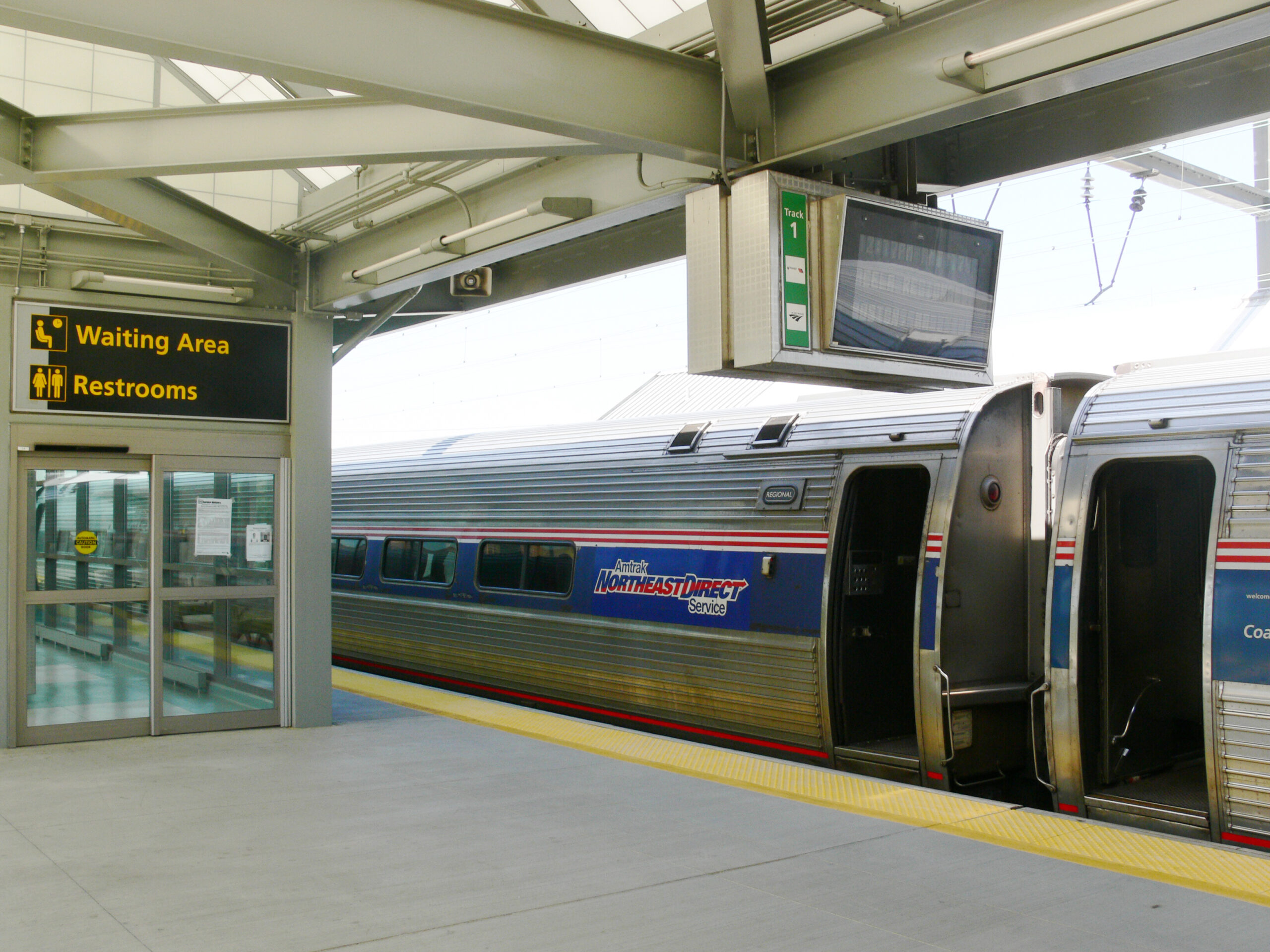
Newark Liberty’s AirTrain connects to Newark Airport Station, where NJ Transit and Amtrak trains run directly into Penn Station in Midtown Manhattan — often the single fastest airport-to-Manhattan transit trip of the three, at around 25-30 minutes total once you’re on the train. The tradeoff is a separate NJ Transit fare and a walk or shuttle between terminals and the station. For travelers headed to the East Side or Downtown, the Penn Station arrival point means an additional subway or cab leg that JFK and LaGuardia travelers headed to those same areas may not need.
Rideshare pickup zones add real time that doesn’t show up in the app’s estimate
All three airports have designated rideshare pickup zones separate from the terminal curb, and the walk (or shuttle ride) to reach that zone can add 10-15 minutes that most travelers don’t budget for, especially at JFK’s more spread-out terminal layout. The in-app estimated arrival time typically starts counting from when the driver reaches the pickup zone, not from when the passenger actually gets in the car after walking there — a gap that surprises first-time flyers more than frequent ones.
Time of day matters more at LaGuardia and JFK than at Newark
Surface-road-dependent transfers (LaGuardia entirely, JFK for the cab/rideshare portion) are far more time-variable across the day than Newark’s rail-first option, since NJ Transit runs on a fixed schedule largely unaffected by highway congestion. A 5 PM Friday landing at LaGuardia or JFK can mean double or triple the transfer time of the same flight landing at 10 AM on a Tuesday, while Newark’s Manhattan-bound train trip stays comparatively consistent regardless of when you land.
Connecting to the other boroughs changes which airport is actually closest in practice
Manhattan-centric transfer-time comparisons miss that JFK is often the most practical option for travelers headed to Brooklyn or Queens, given direct subway and LIRR connections that don’t require detouring through Manhattan first. A traveler flying into LaGuardia bound for southern Brooklyn, by contrast, faces a transfer that’s genuinely awkward regardless of traffic, since no direct transit route covers that specific trip.
Off-peak AirTrain and shuttle frequency is worth checking before a late-night arrival
All three airports reduce train and shuttle frequency overnight, and a traveler landing on a delayed late flight can end up waiting 20-30 minutes for the next AirTrain or terminal shuttle rather than the few minutes typical during the day. Checking the specific overnight schedule for whichever airport you’re landing at, rather than assuming daytime frequency applies, avoids an unpleasant surprise after a long flight.
Shared vans and airport-specific car services occupy a real middle option
Beyond taxis, rideshare, and transit, shared van services and airport-specific car services operate fixed routes and rates from all three airports, often at a lower cost than a solo rideshare during surge pricing and with more predictable timing than a shared subway-and-walk itinerary. These services are worth comparing directly against rideshare pricing at the actual time of travel, since rideshare surge pricing during peak arrival windows can make the “cheaper” option considerably more expensive in practice.
Terminal-specific walk distances vary enormously within the same airport
JFK’s terminals are spread across a wide footprint connected by the AirTrain, meaning a traveler transferring between two JFK terminals for a connecting flight can face a longer walk-and-ride combination than a nonstop flight into a single terminal at LaGuardia or Newark. This matters for connection planning, not just arrival transfers — a tight domestic-to-international connection at JFK carries real terminal-transfer risk that the same layover time at a more compact airport wouldn’t.
Real-time transit apps now cover the AirTrain and NJ Transit legs directly
Most major transit and mapping apps now incorporate live AirTrain and NJ Transit schedule data alongside subway and bus arrivals, meaning a traveler can plan a full door-to-door route — including the airport-internal leg — before ever landing, rather than figuring out transit connections after arrival. Checking this in advance, especially for a late or early flight where transit frequency drops, removes a lot of the guesswork that used to make airport transfers feel more improvised than they need to be.
Next step: before booking, check which airport actually gets you closest to your final destination via direct transit — not just which airport is closest to Manhattan on a map — since the real difference in door-to-door time often comes down to that connection, not the flight itself.
New York Daily News accepts guest contributions on NYC travel topics — see our Travel write-for-us page if this is your beat.
Photo: “Newark Airport train station” by Andreas Praefcke, licensed under CC BY 3.0 (https://creativecommons.org/licenses/by/3.0/).