

Filing a federal tax return with the Earned Income Tax Credit doesn’t automatically capture the full credit New York City residents are actually eligible for. NYC stacks its own local EITC supplement on top of both the federal and state credits, and it’s calculated and paid separately — meaning eligible filers who don’t know it exists sometimes leave real money unclaimed. Here’s how the three-layer credit actually works.
The credit exists in three separate layers, not just one
Eligible NYC filers can claim the federal EITC, a New York State EITC (calculated as a percentage of the federal credit), and a New York City EITC (calculated as a percentage of the state credit) — three distinct credits that stack, not three names for the same benefit. A filer who claims only the federal credit, either by not knowing about the state and city add-ons or by using tax software that doesn’t surface them clearly, is leaving real money unclaimed.
Eligibility generally follows federal EITC rules, with New York-specific residency requirements added
To claim the NYC EITC specifically, a filer generally needs to have been a full-year or part-year New York City resident and otherwise qualify for the federal and state credits based on earned income, filing status, and number of qualifying children — childless workers can qualify too, though at a significantly lower credit amount than filers with dependent children. The income thresholds change periodically, so checking the current year’s specific limits rather than assuming last year’s cutoff still applies is worth doing before assuming ineligibility.
The credit is refundable, meaning it can generate a refund beyond taxes owed
Because the EITC (at all three levels) is a refundable credit, an eligible filer can receive money back even if they owed little or no tax for the year — this is a meaningfully different mechanism than a standard deduction or non-refundable credit, which can only reduce a tax bill to zero, not generate a payment beyond that. This refundability is a large part of why the EITC is considered one of the most effective anti-poverty tax provisions at the federal level, and the city and state layers extend that same effect locally.
Free tax prep help exists specifically to catch credits filers might otherwise miss
NYC runs a free tax preparation program (NYC Free Tax Prep) specifically aimed at helping eligible New Yorkers claim the full federal, state, and city EITC along with other credits, using IRS-certified volunteer preparers rather than paid commercial tax software or preparers who don’t always surface every applicable local credit. Filers earning below the program’s income threshold can use these free services and are specifically advised to do so if they’ve historically self-filed with software that doesn’t clearly flag city-level and state-level EITC eligibility.
Paid tax preparers don’t always catch every layer of the credit
Commercial tax preparers, particularly ones without specific New York City expertise, have been known to correctly claim the federal EITC while missing the state and city add-ons, especially for filers using standard national tax prep chains rather than a New York-focused preparer. Double-checking a completed return for New York State Form IT-215 (or the relevant EITC claim form) and confirming the city credit is included is a reasonable step before filing, particularly for a first-time filer working with a new preparer.
Immigration status affects eligibility in ways that trip up otherwise-eligible filers
EITC eligibility (at all three levels) generally requires a valid Social Security number for the filer, spouse, and any qualifying children claimed — filers using an Individual Taxpayer Identification Number (ITIN) instead of a Social Security Number are generally not eligible for the EITC specifically, even though they may be eligible to file taxes and claim other credits. This distinction is a frequent source of confusion for mixed-status households, where some family members have valid SSNs and others don’t, and is worth clarifying with a qualified preparer rather than assuming either full eligibility or full ineligibility.
The credit amount depends heavily on number of qualifying children, not just income level
The federal EITC (and by extension its state and city percentages) scales significantly based on the number of qualifying children claimed, with the credit for filers with three or more qualifying children substantially larger than for childless filers at a similar income level — two filers with identical income can receive very different total EITC amounts purely based on household composition. Understanding this scaling matters for filers trying to estimate their expected credit before actually filing.
Claiming the credit for a prior year you missed is often still possible
Filers who realize they were eligible for the EITC in a past year but didn’t claim it can generally file an amended return to claim the credit retroactively, within the IRS’s standard statute of limitations for amended returns (typically three years from the original filing deadline) — a real, available fix for filers who discover after the fact that they missed the city or state layer of the credit in a prior tax year. This is worth knowing specifically because the state and city EITC layers are the ones most commonly missed on an original filing.
The credit amount is recalculated every year, not fixed once and forgotten
Federal, state, and city EITC parameters — income thresholds, credit percentages, maximum amounts — are reviewed and can change from year to year, meaning a filer’s credit amount from a prior year isn’t a reliable estimate for the current year even if their income and family situation haven’t changed. Filers who assume “I got roughly this much last year, so it’ll be similar this year” without checking current-year parameters sometimes miscalculate their expected refund by a meaningful margin.
Next step: before filing this year, check whether you qualify for NYC Free Tax Prep’s income threshold and use a certified preparer through that program rather than self-filing with generic software, specifically to make sure all three layers of the credit — federal, state, and city — actually get claimed.
New York Daily News accepts guest contributions on NYC finance and personal finance topics — see our Finance write-for-us page if this is your beat.
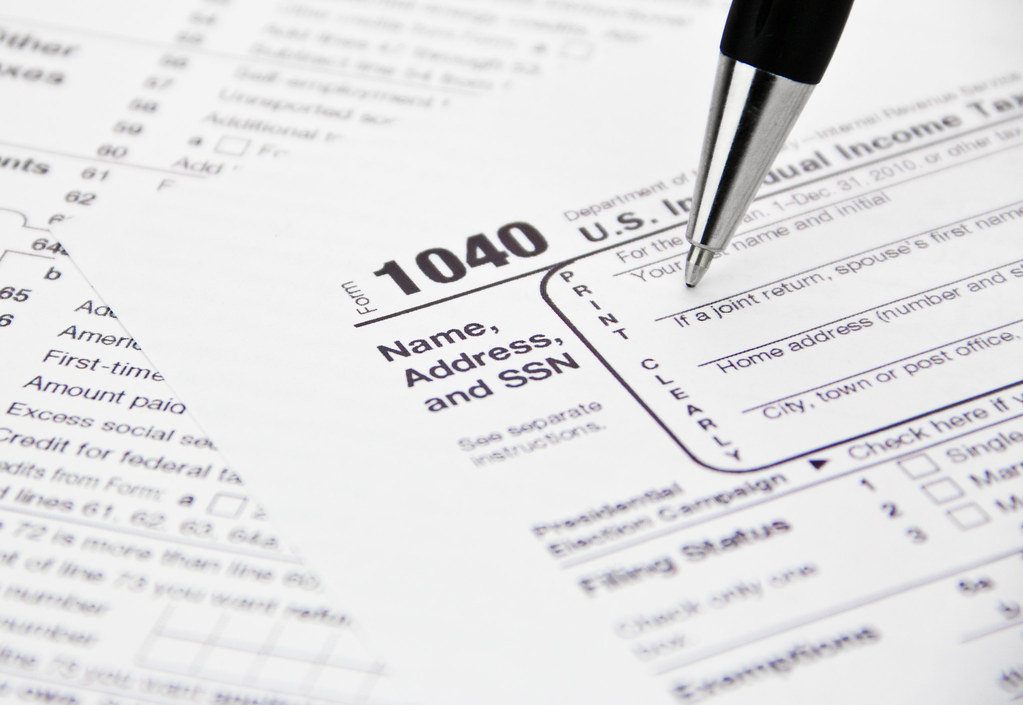
Photo: “IRS 1040 Tax Form Being Filled Out” by kenteegardin, licensed under CC BY-SA 2.0 (https://creativecommons.org/licenses/by-sa/2.0/).