

2026 NFL Preview · Sophomore Watch
One of Last Year’s Best Rookies Is About to Bust. We Name Him, Plus Every 2025 Sophomore Set to Leap or Slump.
Year 2 makes some players stars and quietly ends others. We sorted the entire 2025 class into three groups, and the last group is going to start an argument.
The sophomore season is the great separator. Rookie year, nobody knows anything: not the player, not the coaches, not the defense across from him. By Year 2, the league has tape, the excuses are gone, and the question gets simple. Was that real?
For the 2025 class, that reckoning arrives this fall. Some of these players are going to explode into genuine stars. Some are stuck in situations that will quietly strangle their production no matter how talented they are. And at least one player everybody loved as a rookie is, in our read, heading for a fall.
We sorted the notable names into three tiers: Taking the Leap, Toss-Up, and Slump Warning. Each gets a leap-likelihood meter. Fair warning: you will disagree with the last tier, and we would like to hear about it.
Find your guy, then see which tier we put him in. Then come argue.
Stars in waiting
Real rookie production, and a situation that gets better in Year 2. These are the safest bets to jump from good to great.
Egbuka already had a terrific rookie year, emerging as an Offensive Rookie of the Year candidate early and finishing as a top-16 fantasy receiver despite the Bucs’ receiver room being wrecked by injuries. Here is the exciting part: he did it in the wrong role.
Tampa Bay was forced to use him as an outside one-on-one winner, which does not suit his game. He was in motion at the snap on only 29 of 529 routes. Under the offensive staff’s design, that changes in 2026, with more motion, more free releases, and easier targets. A player this productive in a bad fit tends to erupt once the fit is corrected. Some evaluators think he could lead the league in receptions.
Why we’re this confident
The separation skills and hands were never in question, only the usage. Fixing usage is the easiest kind of breakout to predict because it does not require the player to improve at all, just to be deployed correctly. Add a healthy receiver room and the target quality rises too.
McMillan already made the leap look easy. The eighth overall pick led all rookies in receiving yards (1,014) and touchdown catches (seven), served as Bryce Young’s clear No. 1, and helped Carolina end a seven-year playoff drought. For a receiver, a 1,000-yard rookie season is the strongest possible predictor of a big Year 2.
The one reason this is not a lock: Young’s own development and the offense’s growth have to keep pace. But a true WR1 from Day 1, still ascending, on a team trending up, is exactly the profile that goes from very good to elite in the second season.
The one thing to watch
Target competition. If Carolina adds another mouth to feed or leans more run-heavy as it stabilizes, McMillan’s volume could plateau even as his efficiency rises. But the talent and the role are both already there.
Jeanty flashed real ability as a rookie and enters Year 2 as the undisputed centerpiece of the Raiders’ offense. He is not splitting carries. In a rebuilding situation with a quarterback transition ahead, the offense runs through him, and volume plus his tackle-breaking style is a recipe for a major statistical jump. For the fans who backed him from his record-setting college days, the Ashton Jeanty Boise State throwback is the deeper cut.
The variable
Game script. A rebuilding team that trails often can either abandon the run or lean on it to protect a young quarterback. Vegas has signaled the latter, which is good news for Jeanty’s workload.
Tight end is the position built for Year 2 leaps, and Loveland already outran the curve, putting up 713 receiving yards and six touchdowns as a rookie and drawing top-eight-at-the-position praise. In an offense that took real strides with Caleb Williams last season, a second-year tight end who has already proven he can produce is a strong bet to climb into the position’s elite.
Why tight ends jump in Year 2
The position asks rookies to master blocking, route detail, and NFL-speed reads all at once, which is why most produce little as first-years. Loveland producing anyway is the tell. The jump from “good rookie tight end” to “featured weapon” is short.
Could go either way
The talent is real. The situation carries a genuine risk. These are the players we could see booming or busting, and honestly would not bet the house on either.
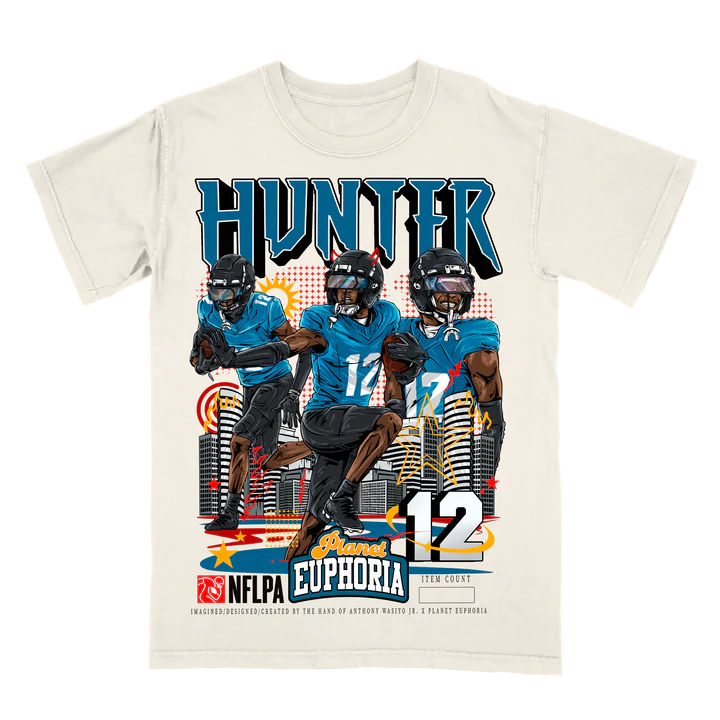
The most fascinating name in the class, and the hardest to place. Hunter’s rookie season was cut to seven games by a knee injury, split across offense and defense. The 2026 plan reportedly shifts him toward full-time cornerback with occasional offensive snaps. If that focus unlocks the All-Pro corner some scouts see, it is a leap. If the team keeps splitting him, or the injury lingers, it is another lost year.
Why he’s a toss-up, not a leap
We simply have not seen enough. Seven games, two positions, one injury. The ceiling is the highest in the class and the floor is a third straight incomplete season. That is the definition of a coin flip. Jaguars fans betting on the ceiling can find the Travis Hunter tee collection here.
A popular breakout pick, and the talent justifies the hype. The catch is the target competition on his own team: with Loveland ascending at tight end and an established receiver room, Burden has to earn his share of a crowded pie. The Bears’ offense is on the rise, which lifts everyone, but there may not be enough footballs for every young pass-catcher to break out at once.
The bull and bear case
Bull: elite yards-after-catch ability in an improving offense with a second-year Caleb Williams. Bear: he is arguably third in the target pecking order behind an ascending tight end and the incumbents. Role, not talent, is the question.
The under-the-radar riser. Shough closed his rookie year strong, going 5-3 as a starter over his final eight games with a 69.7% completion rate, a 97.1 passer rating, and 281.5 total yards per game. New Orleans has built well around him, the offensive line projects to improve, and he now has a genuine 1B receiver in rookie Jordyn Tyson. Quietly, this is one of the better situations of any sophomore quarterback. Saints fans who want in before the rest of the league catches on can grab the hand-drawn Tyler Shough collection now.
Why not higher
Eight games is a small sample, and quarterback is the position where Year 2 regression is most common once the league has a full year of tape. The situation is a leap situation. The projection is held back only by how little we have seen.
Buyer beware (yes, argue with us)
This is the tier that will make people mad. The talent is not the issue. The situation is, and no amount of ability fixes a bad one in a single season.
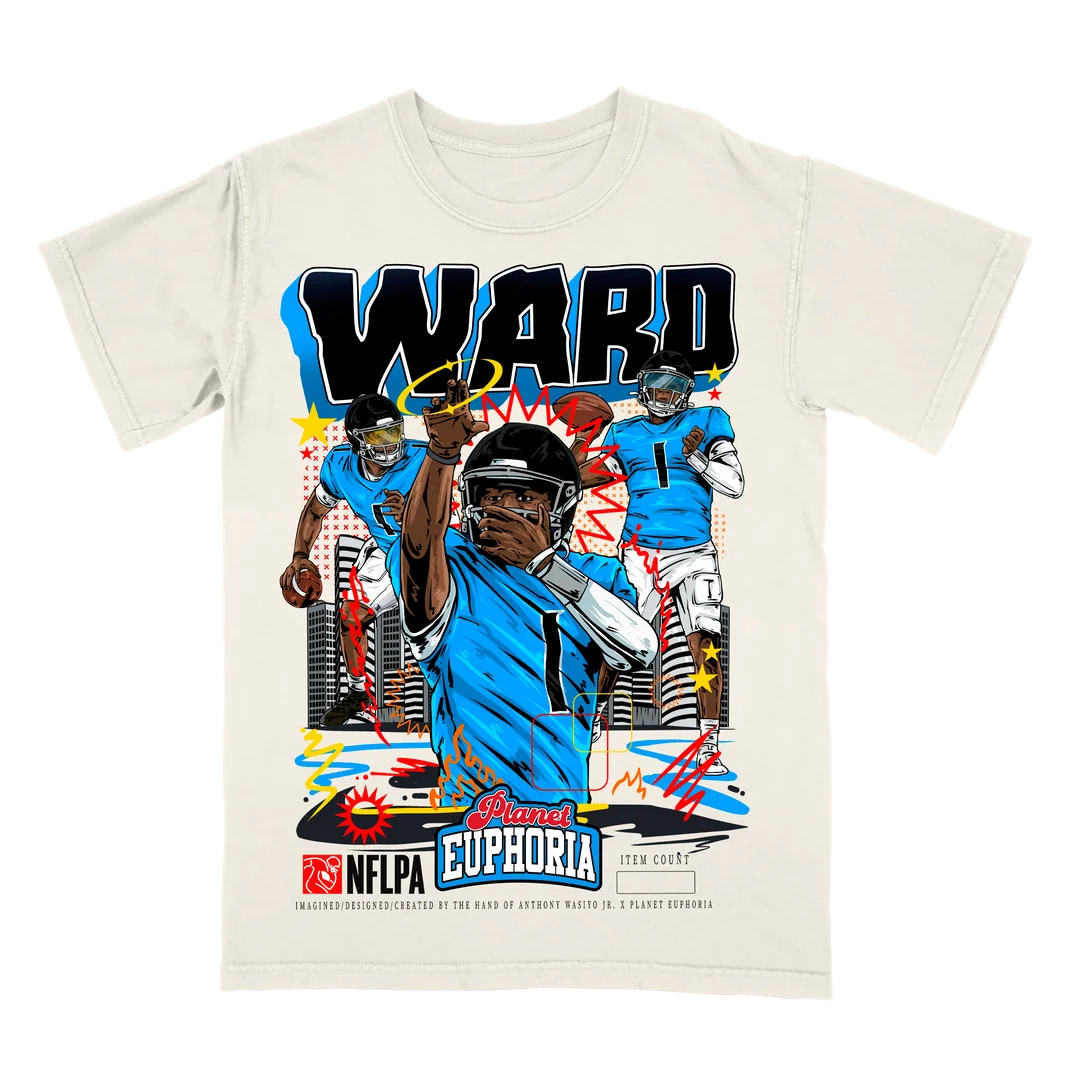
Here is the one that will get us yelled at. The 2025 No. 1 overall pick is a popular breakout choice, and we understand why: the arm talent is real, and Tennessee added a genuine No. 1 receiver in fourth overall pick Carnell Tate. So why the slump warning?
Because a full regime change is a double-edged sword. New front office, new coaching staff, new system, all installed around a quarterback still learning the pro game. Some analysts are openly not sold on the environment yet, and second-year quarterbacks asked to absorb an entirely new scheme often take a step sideways before they step forward. The talent says leap. The situation says be careful. We are betting the situation wins in 2026, and the leap comes in 2027.
The case we might be wrong
If the Ward-to-Tate chemistry that reportedly popped in the spring is real, and if the new staff’s scheme fits Ward’s strengths, everything we just wrote flips and he leaps. We are not saying he is bad. We are saying a brand-new everything is a poor bet for a clean sophomore jump. Tell us why we are wrong, and if you are backing the leap, the hand-drawn Cam Ward design is right here.
Not one player, but a category worth a warning. History says the average sophomore does not leap. Most 2025 draftees performed at an average level or below as rookies, and a crowded depth chart is where good young players go to stall. When you hear a Year 2 breakout pick, ask the boring question first: are the targets or touches actually there? If a talented sophomore is buried behind established veterans and other ascending youngsters, the tape can improve while the numbers flatline, and that reads as a slump even when the player is quietly getting better.
How to tell a real leap from a mirage
Follow the opportunity, not the highlights. A camp-hype receiver on a team with an entrenched top three is a worse bet than a quiet name with a clear path to volume. Situation beats talent for single-season production almost every time.
The Bottom Line
Our safest leaps are Egbuka and McMillan, because both already produced and both have situations trending up. Our sneaky pick is Shough, who nobody is talking about. And our line in the sand is Cam Ward, not because he lacks talent, but because a total regime change is the enemy of a clean Year 2 jump. Screenshot it. If he lights it up, we will hear about it, and we will deserve it.
The pattern underneath all of it is simple. Year 2 rewards opportunity more than ability. Find the sophomores with a clear runway, and you have found this year’s breakouts before everyone else does.
 Tyler Shough
 Travis Hunter
 Ashton Jeanty
 Cam Ward
2026 NFL Sophomores: Your Questions, Answered
Which 2025 rookie is most likely to break out in 2026?
Did Tetairoa McMillan have a good rookie year?
Is Cam Ward a good bet to break out in his second season?
Why do some rookies slump in their second season?
Player situations, statistics, and scouting assessments verified via ESPN, NFL.com, Sports Illustrated, and Bleacher Report reporting as of July 2026. Leap-likelihood figures are the author’s editorial judgment, not a statistical model. Projections reflect offseason reporting and will change through the season.