

What City Council Actually Proposed
According to amNY, several City Council members are pushing legislation to test restricted-traffic zones in select neighborhoods across New York City as a way to improve pedestrian safety and reduce vehicle speeds. The proposal would create designated areas where through-traffic is discouraged or blocked, forcing drivers to use arterial roads instead of cutting through residential blocks.
This isn’t a novel concept—cities like London, Paris, and Oakland have implemented similar schemes. But NYC’s version faces structural problems that the proposal glosses over entirely.
The Parking Displacement Math Nobody’s Discussing
A low-traffic neighborhood works by funneling cars away from side streets. That’s the point. But where do those cars go? In a city where the Department of Transportation charges $252 per month for residential parking permits and street parking already operates at near-100% capacity in most neighborhoods, the answer is blunt: they don’t vanish. They circle for 20 minutes, emit more greenhouse gases, and then park on the perimeter streets bordering the pilot zones.
The bill doesn’t address spillover parking impact on adjacent blocks or establish a baseline for monitoring it. That’s a recipe for neighboring residents to file 311 complaints about their previously quiet avenue turning into a overflow lot—and then for the whole program to crater under political pressure.
Who Actually Benefits From This Design
Low-traffic neighborhoods work best in places with robust public transit and alternative routes that genuinely disperse traffic. Midtown Manhattan or downtown Brooklyn have the density and subway infrastructure to absorb diverted vehicles. But roll this out in Bayside, Forest Hills, or deep Sunset Park, and you’re asking drivers to detour miles instead of blocks. The safety benefit becomes invisible against the time cost.
The neighborhoods with the most pedestrian fatalities—the stated justification for the pilot—tend to be exactly those places where people depend on cars for the last-mile problem transit doesn’t solve. Reducing through-traffic in a neighborhood where it doesn’t exist much anyway changes nothing.
The Speed Reduction Question Remains Unanswered
The pilot’s underlying claim is that removing traffic flow encourages safer speeds. Evidence from other cities suggests that’s only true if enforcement is relentless. London’s low-traffic neighborhoods work because they pair bollards with cameras and fines. NYC’s Department of Transportation doesn’t have the enforcement bandwidth to make that work here. Speed camera tickets in the city already take months to process.
Without that enforcement piece—which the bill apparently doesn’t mandate—you get empty streets during business hours and zero speed reduction. A few drivers will slow down because the road feels narrower. Most won’t.
What Would Actually Need to Happen First
If City Council wants to pilot this responsibly, they need to:
- Require DOT to publish a pre-pilot parking occupancy study for any neighborhood selected, with quarterly impact reports during and after the program
- Pair the traffic restriction with mandatory speed enforcement equipment, not just posted limits
- Select pilot neighborhoods that already have two subway lines within a half-mile and existing arterial routes with capacity
- Set a specific metric—at least a 15% reduction in average speed or a 10% reduction in crashes—to determine whether expansion proceeds
None of that requires reinventing municipal government. It requires the bill’s sponsors to write a real pilot design instead of importing a London concept and hoping NYC’s density alone makes it work.
The Inevitable Rollout Timeline
City Council’s typical process means this bill, if passed, would land on the Mayor’s desk months from now. Implementation would take another six months of DOT planning. A single pilot neighborhood wouldn’t see bollards installed until late 2025 at the earliest. By then, the political appetite may have shifted, or the first six months of data might reveal the spillover problem is worse than anticipated.
That doesn’t mean the idea is worthless. It means the bill needs teeth before it gets a vote. If you’ve seen low-traffic neighborhood pilots succeed or fail in your own neighborhood, or you have data on parking displacement, we’d like to hear from you. Submit your reporting or analysis here.
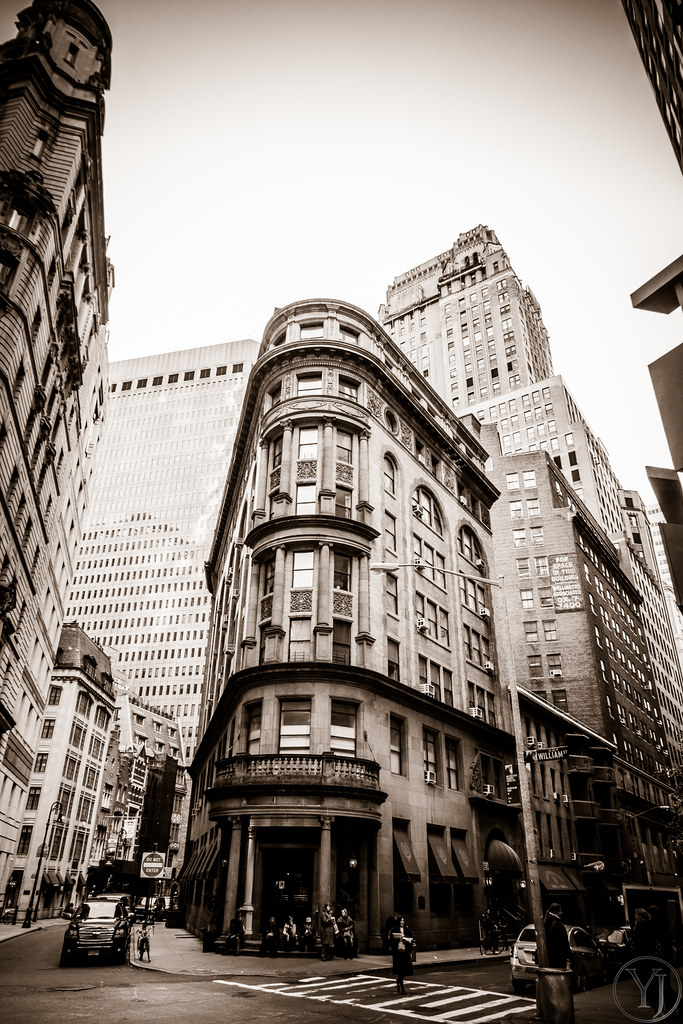
Photo: “New York City street” by Zeeyolq Photography, licensed under BY (https://creativecommons.org/licenses/by/2.0/).