

An artist in Brooklyn has built a mechanical device that increases pedaling resistance on Citi Bikes when they enter neighborhoods experiencing rapid rent increases, forcing riders to literally feel the drag of housing inequality. According to Gothamist, the installation called “Ground Truth” clips onto a bike’s fork and makes each pedal stroke require more effort in these designated zones, turning gentrification into a tactile problem riders can’t ignore for the three minutes they’re moving through it.
The device is protest art, not urban planning, and that distinction matters enormously. What the artist has actually created is a mirror held up to a specific subset of New Yorkers—the ones affluent enough to use bike-share, traveling through neighborhoods they’re reshaping economically without feeling the weight of that transformation. But the gap between making people uncomfortable and making systemic change is roughly the distance between Manhattan and Queens.
## Why Physical Discomfort Isn’t a Policy
The mechanism is clever enough: riders experience friction, some riders presumably think about why, and maybe—maybe—someone gets off their bike and donates to a housing nonprofit. But here’s what “Ground Truth” doesn’t do: it doesn’t lower a single rent. It doesn’t pressure the city to expand rent stabilization, accelerate community land trust acquisitions, or fund the Housing Preservation Fund at levels that actually prevent displacement. It doesn’t change zoning codes or tax absentee landlords or regulate short-term rentals in a way that removes housing stock from the market.
The device targets behavior and sensation. The housing crisis requires policy. Gentrification doesn’t stop because Williamsburg cyclists feel a heavier pedal on their commute to a $3,500 studio; it stops when there are legal mechanisms that make real estate investment less profitable than preservation. Those mechanisms barely exist in New York right now.
## Who This Actually Reaches (And Who It Doesn’t)
Citi Bike ridership skews toward higher-income users. Annual membership costs $180; casual rides run $3.50 per trip or $15 per day pass. Someone struggling with rent isn’t the cyclist entering a neighborhood on a bike-share bike—they’re the person being pushed out of it. The device’s intended audience—affluent users who live elsewhere and bike through gentrifying zones—represents a real phenomenon, but they’re not the decision-makers on housing policy. They’re not on the City Council. They don’t vote as a bloc on zoning referenda.
The artist has made a statement piece that flatters the people experiencing it. It positions Citi Bike commuters as accidentally complicit parties who just need a moment of empathy engineering. But gentrification isn’t an accident that friction can fix. It’s the outcome of specific policy choices: restrictive zoning that limits housing supply, tax incentives for luxury development, failure to enforce rent regulation, and a city government that treats real estate as a tax base before it treats housing as a human need.
## What Actual Intervention Would Look Like
If the artist wanted to reach people who could change rent trajectories in those neighborhoods, the device would need to operate on a different scale entirely. It might clip onto City Council members’ desk drawers, creating friction on paperwork that delays zoning reforms. It might slow down the permit approval process for luxury conversions. It might exist as a cost multiplier that makes speculative real estate investment marginally less attractive.
In the real world, the interventions that slow gentrification require mandates: mandatory affordable units in new construction, genuine rent stabilization (not the weakened version currently in place), elimination of vacancy bonuses that reward landlords for keeping units empty, and enforcement of existing housing regulations. New York experimented with mandatory inclusionary zoning starting in 2016, and the results have been mixed—too few units produced, too much exemption negotiated away, too late to prevent displacement in neighborhoods already in transition.
## The Art-as-Evidence Problem
What the artist has succeeded in doing is creating a piece of evidence that gentrification is visible and felt as a material force. That’s valuable as data for arguments that already exist. Housing advocates can point to the device and say: “This is what displacement feels like encoded into infrastructure.” But evidence alone hasn’t moved New York’s housing needle in decades. The city has plenty of studies showing that rent growth outpaces income growth. The legal barriers aren’t informational—they’re political and economic.
The device will get media coverage (it already has), it will generate conversation, and some riders will feel momentarily conscious of neighborhood change. None of that translates to the zoning variance denials, rent freeze extensions, or community land acquisitions that actually prevent displacement. Art can document inequality. Policy has to address it.
If you’ve been tracking housing interventions, policy failures, or artist activism around gentrification in NYC, the New York Daily News welcomes guest contributions on the real estate beat.
The real test of this device isn’t whether it makes riders uncomfortable—it’s whether that discomfort translates into a single vote for stronger rent protections, a single protest at a rezoning hearing, or a single landlord choosing preservation over speculation. Until friction becomes force, it remains a conversation starter masquerading as a solution.
For more on how rent burdens get set citywide in the first place, see our breakdown of how the Rent Guidelines Board actually sets your rent increase each year.
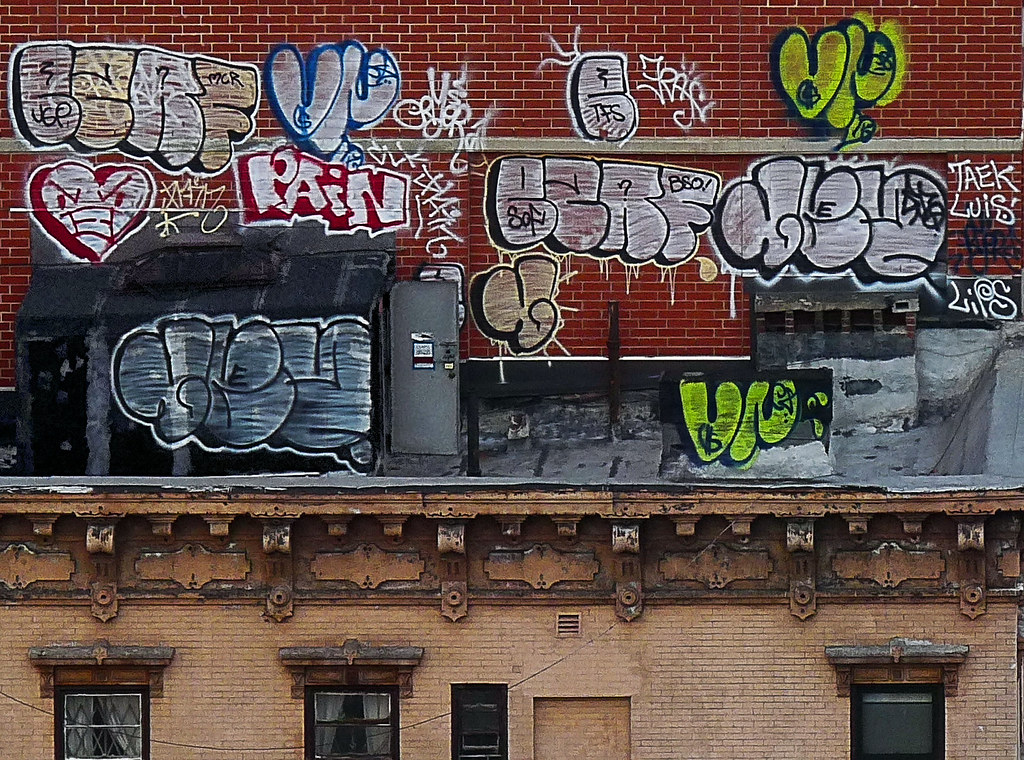
Photo: “Pain in red above the apartment” by joiseyshowaa, licensed under BY-SA (https://creativecommons.org/licenses/by-sa/2.0/).
Related articles: Why Playground Security at NYCHA Sites Remains a Preventable Failure · Why NYC’s $300M Pension Bet on Affordable Housing Won’t Ease Your Rent · Why a $5,850 Midtown Apartment’s Garbage Problem Exposes a Wider Building Code Failure