

Penn Station’s $7 billion-plus reconstruction hinges on which party controls Congress in January, but New York officials are betting they can extract real accountability regardless of who wins.
According to Gothamist, the Trump administration and Amtrak have proposed building a major new entrance on Eighth Avenue, yet Congress adjourned without appropriating money for the project. Some Democratic state lawmakers believe a Democratic Congress would approve funding while also imposing transparency requirements that the current administration has resisted.
This isn’t merely a question of partisan messaging. It’s a test of whether New York can finally use its political leverage to secure something it should have demanded decades ago: full public sight lines into a megaproject that will affect 700,000 daily commuters and define Midtown’s pedestrian experience for the next 50 years.
Why Democrats’ Transparency Push Matters More Than the Funding
The money itself is negotiable. Federal transit dollars flow toward politically favored districts regardless of party. What’s historically scarce in New York infrastructure deals is mandatory disclosure of costs, timelines, and material changes as projects unfold.
Penn Station’s renovation has already inherited decades of cost overruns and scope creep from the MTA’s Second Avenue Subway and the East Side Access project. Amtrak controls much of the station’s operations but answers to a patchwork of federal, state, and local entities—a structure that has enabled information asymmetries. If a Democratic Congress insists on quarterly public reporting, independent oversight, and binding cost caps tied to appropriated funds, that precedent would matter for every future transit project in the region.
The real question is whether New York’s congressional delegation—which includes 13 House Democrats—will actually demand this as a condition of support, or whether they’ll settle for ribbon-cutting credit and move on.
The Eighth Avenue Entrance Proposal Has Unresolved Problems
The new entrance on Eighth Avenue would theoretically improve pedestrian flow by dispersing the crush of riders that currently funnels through the 33rd Street entrance. But the proposal doesn’t yet address where displaced commercial tenants would relocate, whether the entrance would be accessible during construction, or how Amtrak plans to coordinate with the Long Island Rail Road and New Jersey Transit—operators whose own infrastructure improvements aren’t synchronized with this timeline.
An entrance is only as useful as the platforms and tracks behind it. If the entrance opens before platform renovations are complete, you’ve built a front door to a building mid-renovation. The current plan doesn’t publicly commit to phasing or sequencing.
Commuters Need a Specific Deadline and Mandate
If Congress does flip Democratic control, New York should push for legislation that ties any federal appropriation to three concrete requirements:
- Binding completion dates for each phase, with financial penalties—real money returned to the federal treasury—if deadlines slip beyond 90 days.
- Monthly public dashboards showing cost accruals, construction progress, and any change orders, accessible to the public and the City Council Transportation Committee.
- A requirement that Amtrak and LIRR publish a joint operating plan for the transition period, including backup routes and crowd-management protocols for the station’s most congested hours.
These aren’t radical asks. They’re standard in European transit projects and increasingly expected for major U.S. infrastructure. New York has leverage: federal funding for a northeastern corridor upgrade requires working with Amtrak’s partners. Congress should write that leverage into statute.
The Broader Pattern of Missed Accountability
Penn Station’s moment reflects a decade-long cycle. New York gets a dramatic announcement about a major infrastructure fix—the Hudson Yards redevelopment, the L train shutdown plan, the Coney Island rezoning. Initial excitement fades into construction delays, cost growth, and minimal transparency until something breaks publicly. Then remedial oversight hearings happen too late to change the fundamental project architecture.
Penn Station will be different only if New York’s political class treats the midterm election not as a funding opportunity but as a negotiating moment. Democrats won’t pass the infrastructure bill that includes Penn Station money unless they believe public accountability is built in. Republicans won’t accept Democratic terms unless public pressure makes the alternative politically costly.
That pressure doesn’t emerge organically. It requires City Council members, state senators, and community boards to draft specific language before January and circulate it among the incoming Congress’s staff—before the legislative fog lifts and Penn Station becomes one item among hundreds on the agenda.
What Commuters Should Actually Watch For
Between now and November, monitor whether any New York Democrat running for reelection is willing to say publicly that they’ll only support Penn Station funding if it includes binding cost caps and public dashboards. Most won’t. Most will say infrastructure good, transparency important but handled separately. That gap—between stated priorities and actual negotiating positions—is where Penn Station’s future will either improve or repeat the past 20 years.
The Eighth Avenue entrance will eventually exist. The question is whether the public will see inside the construction budget when it does.
Have you experienced the practical failures of Penn Station’s current infrastructure, or worked on transit accountability campaigns? Send us your reporting or analysis.
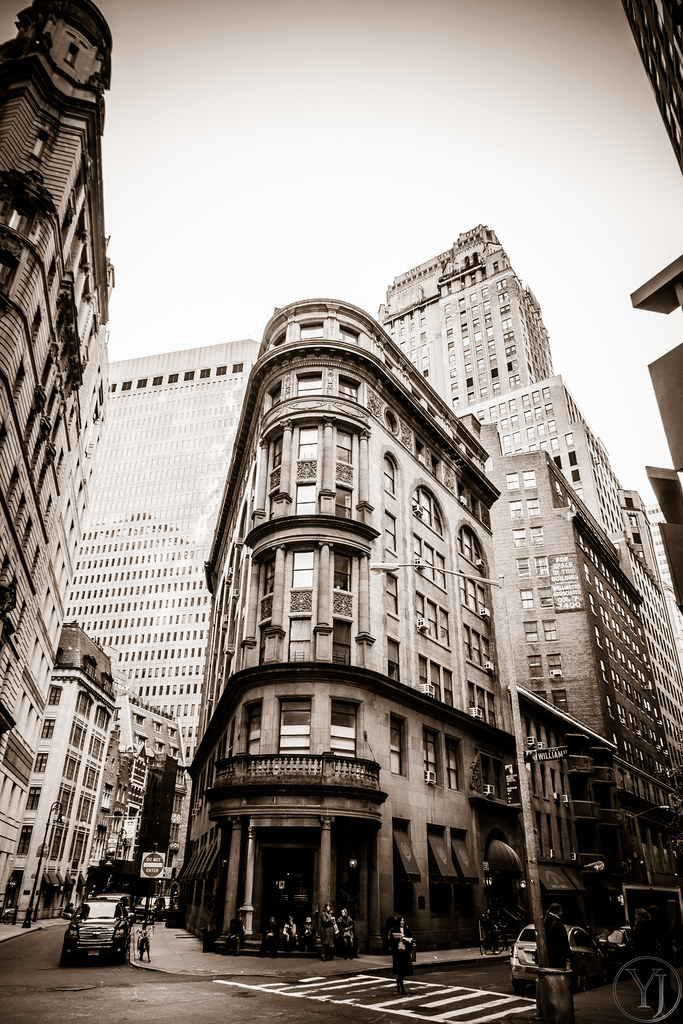
Photo: “New York City street” by Zeeyolq Photography, licensed under BY (https://creativecommons.org/licenses/by/2.0/).